


all your optimization solutions
Put mathematical programming and artificial intelligence at the service of efficiency
news
Artelys Knitro 15.1: Solve your toughest pooling applications!
Artelys releases Knitro 15.1, bringing a new wave of performance upgrades and usability improvements to help you solve large-scale optimization problems faster than ever.
Artelys contributes to SNCF Voyageurs’ OPTIPLACE project
Artelys is contributing to the development and industrialisation of the OPTIPLACE project, which aims to improve passenger seating arrangements on Ouigo trains by developing the optimisation module used for seat assignment.
Swissgrid selects Artelys Crystal Super Grid
Artelys is pleased to announce that Swissgrid, the Swiss electricity Transmission System Operator (TSO), has selected Artelys Crystal Super Grid, our multi-energy simulation solution, to support their strategic planning and system analysis activities.
solutions
— Relying on their high level of expertise in quantitative methods, our consultants deliver efficient solutions to complex business problems that best meet the needs of our clients.

Strong skills in Operational Research, Modeling and Decision Support

Recognized know-how in scientific consulting and project management

A business experience of energy, transport and logistics issues

Mastery of methods and tools for numerical optimization and statistical analysis

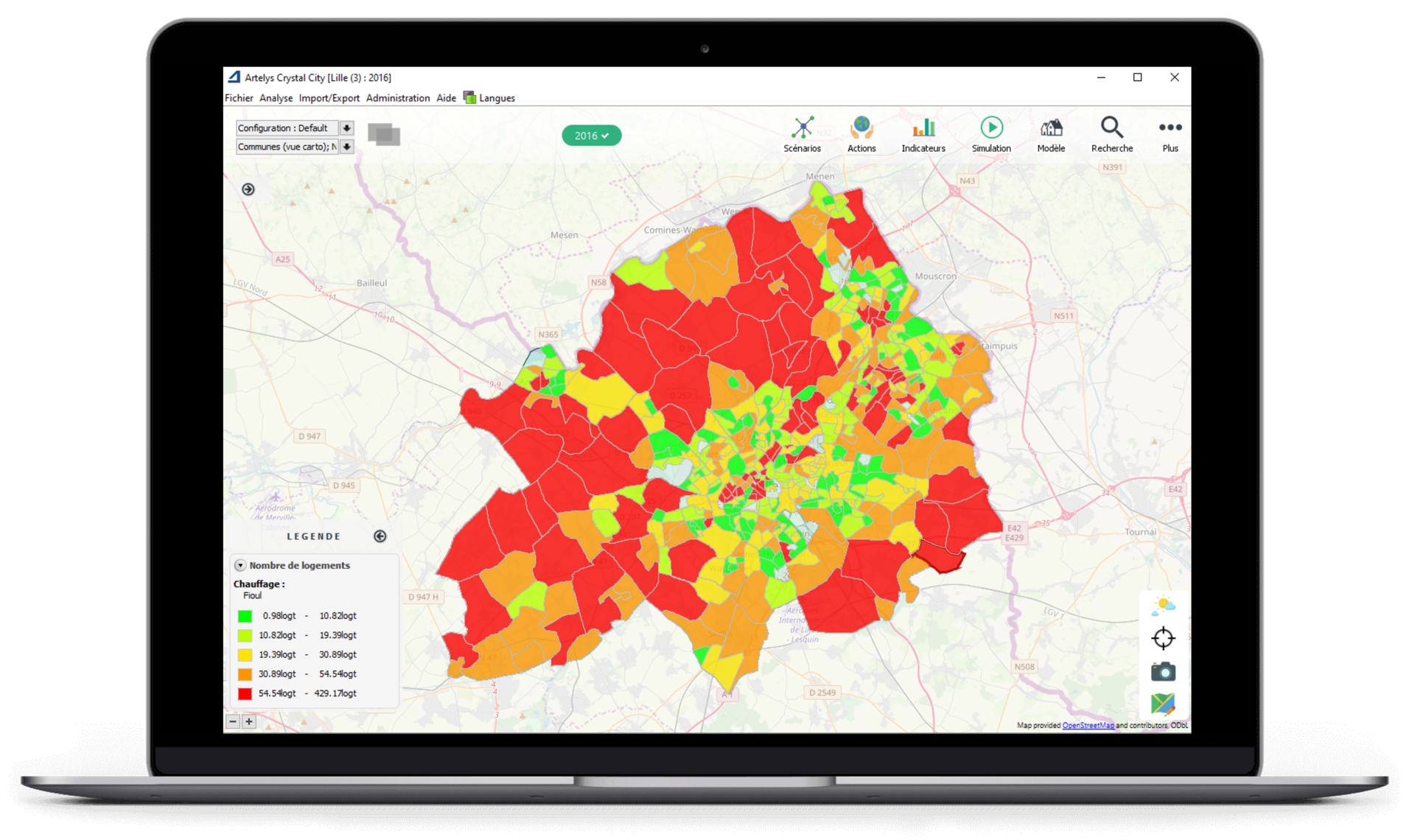
Decision support for territorial energy planning
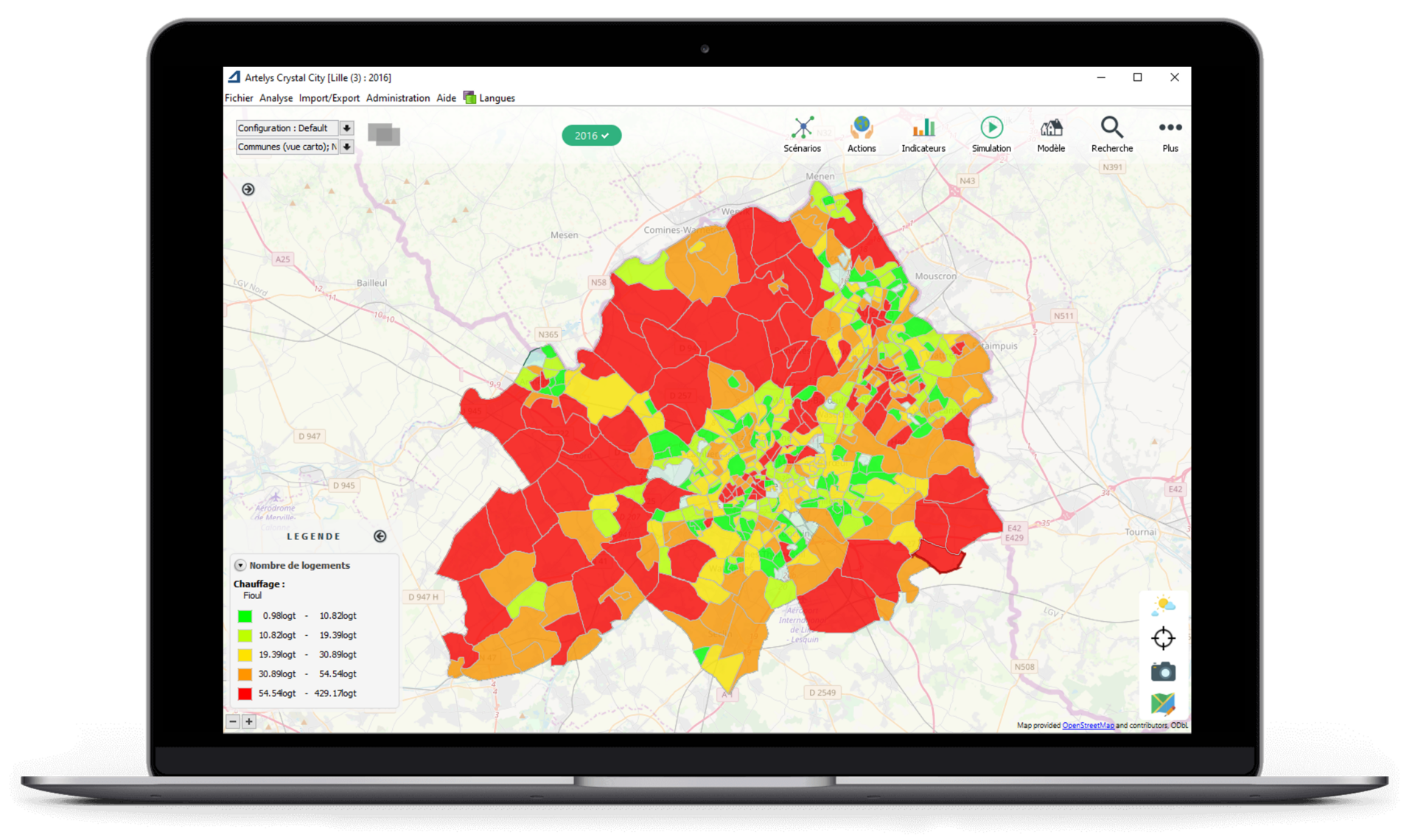
— Artelys Crystal City is the reference tool for territorial energy planning. Its intuitive interface and advanced functions make it the ideal conductor to carry out the energy transition in the territories.
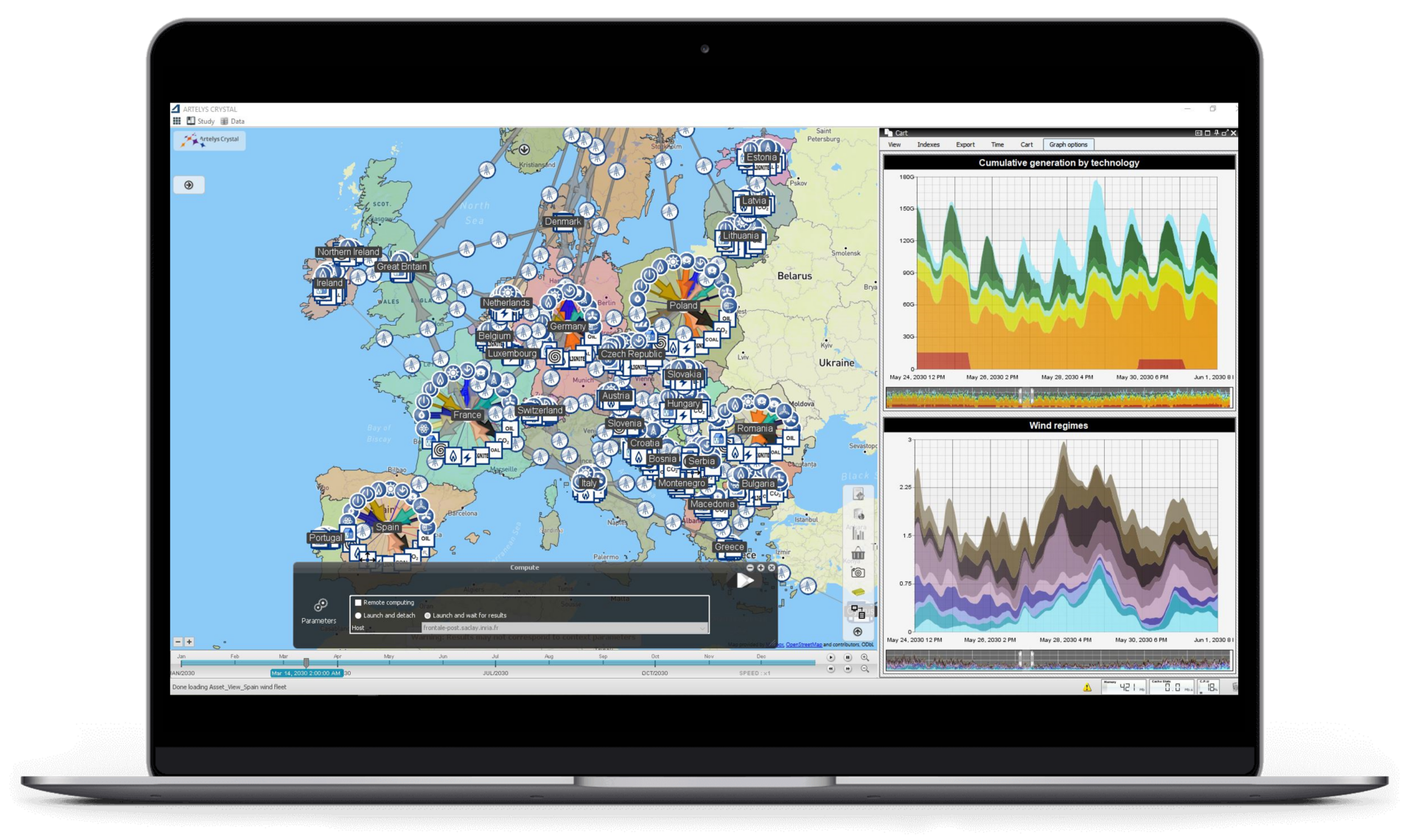
Optimization of interconnected systems
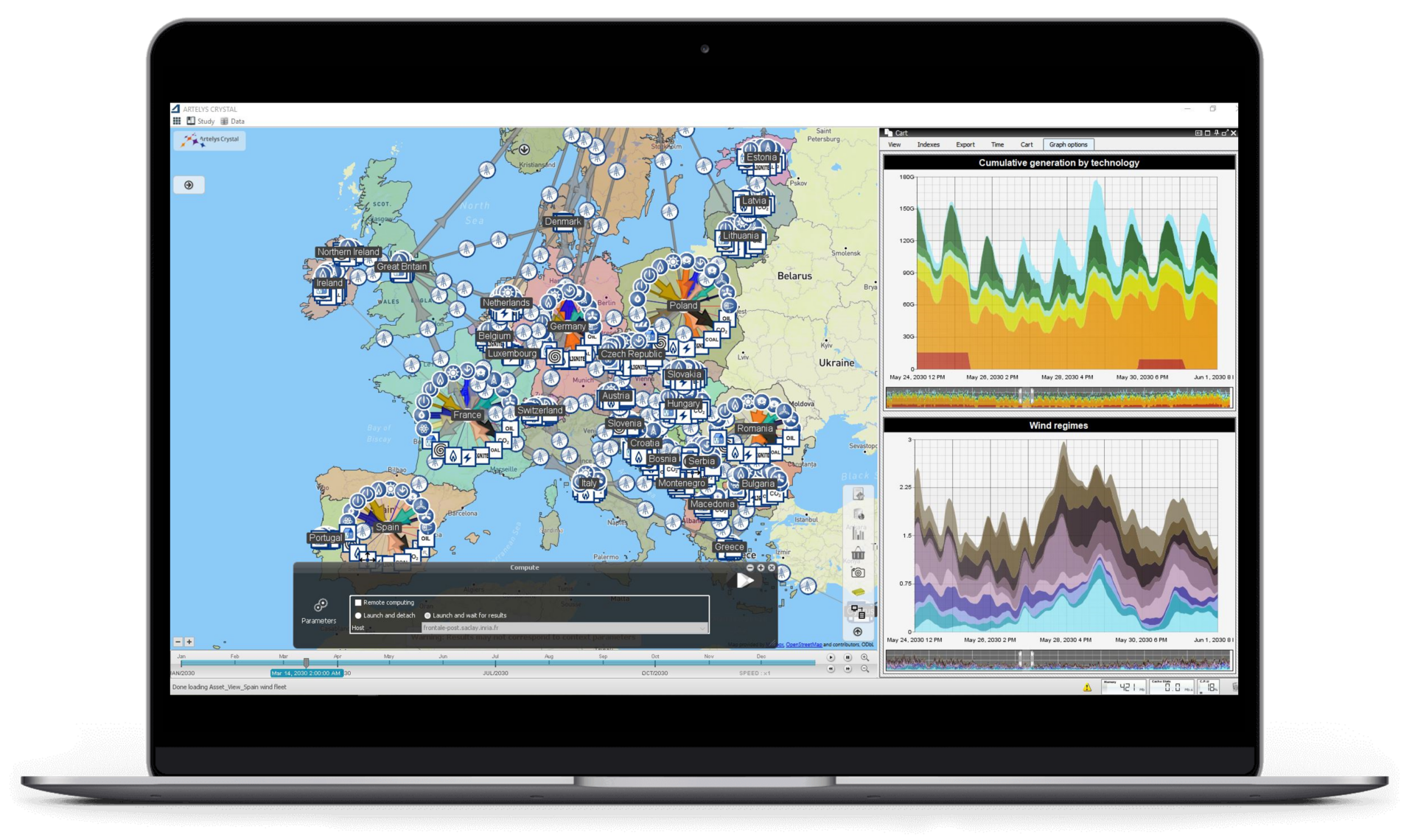
— Artelys Crystal Super Grid provides the quantitative elements to evaluate the costs and benefits of an energy strategy and to optimize it.
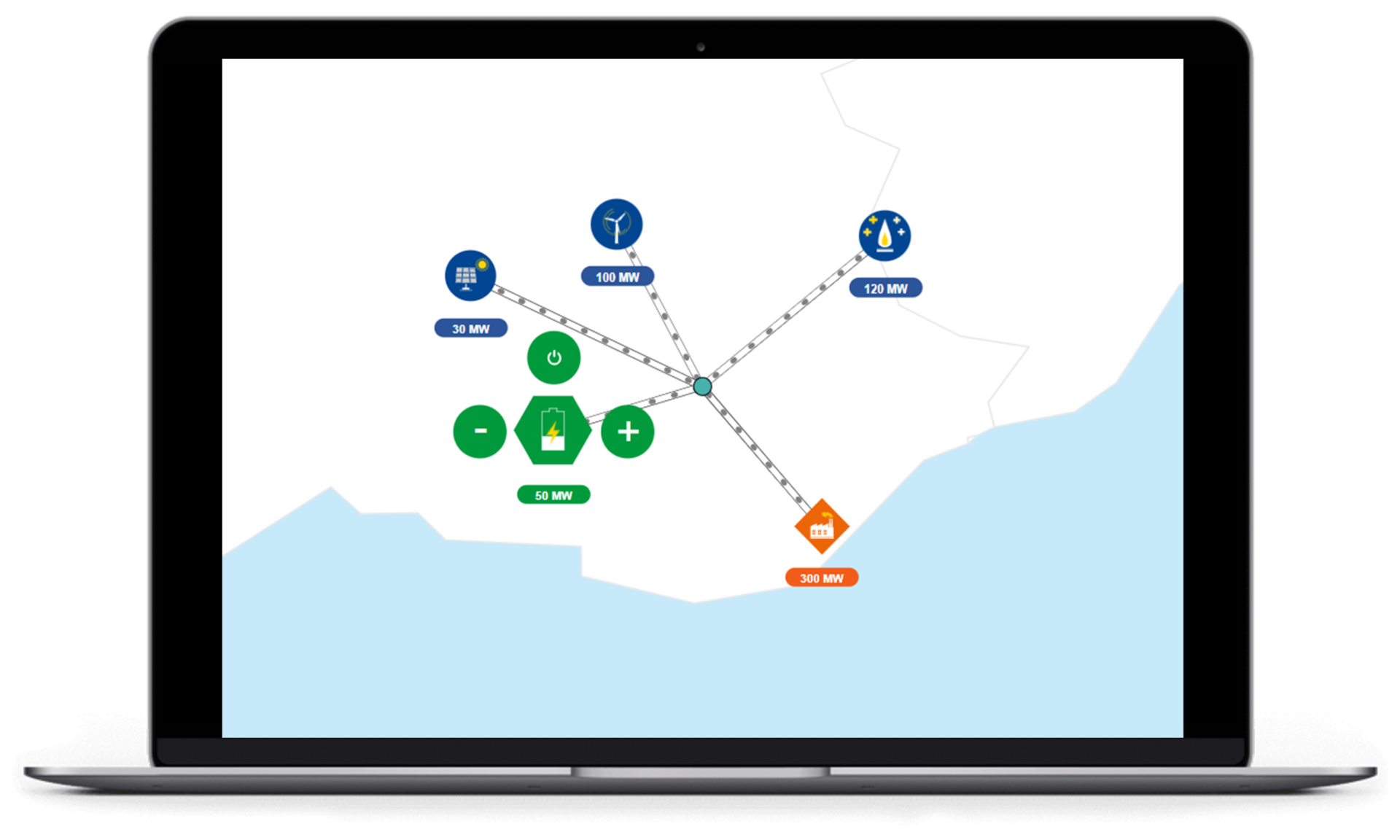

A digital twin to gain insights into the role of networks in the energy transition
— Energy infrastructures are the key to ensure the proper performance of the system. Once the production is settled, network management raises many complex issues in order to guarantee the efficient distribution of energy.
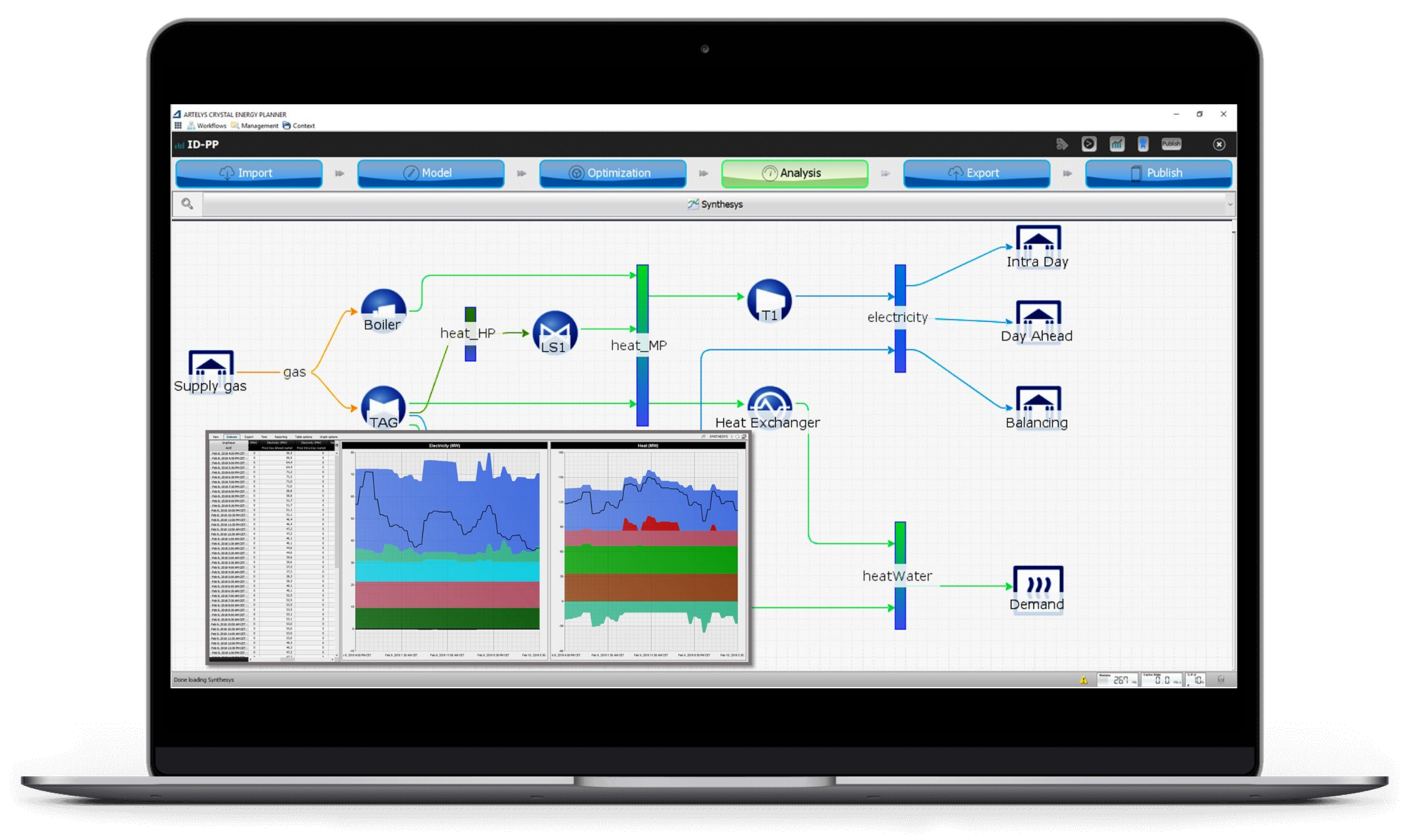

Operational management in short and medium term
— Artelys Crystal Energy Planner optimizes the short- and medium-term operational management of energy production assets. Operational planning, simplified and more reliable, becomes more competitive.
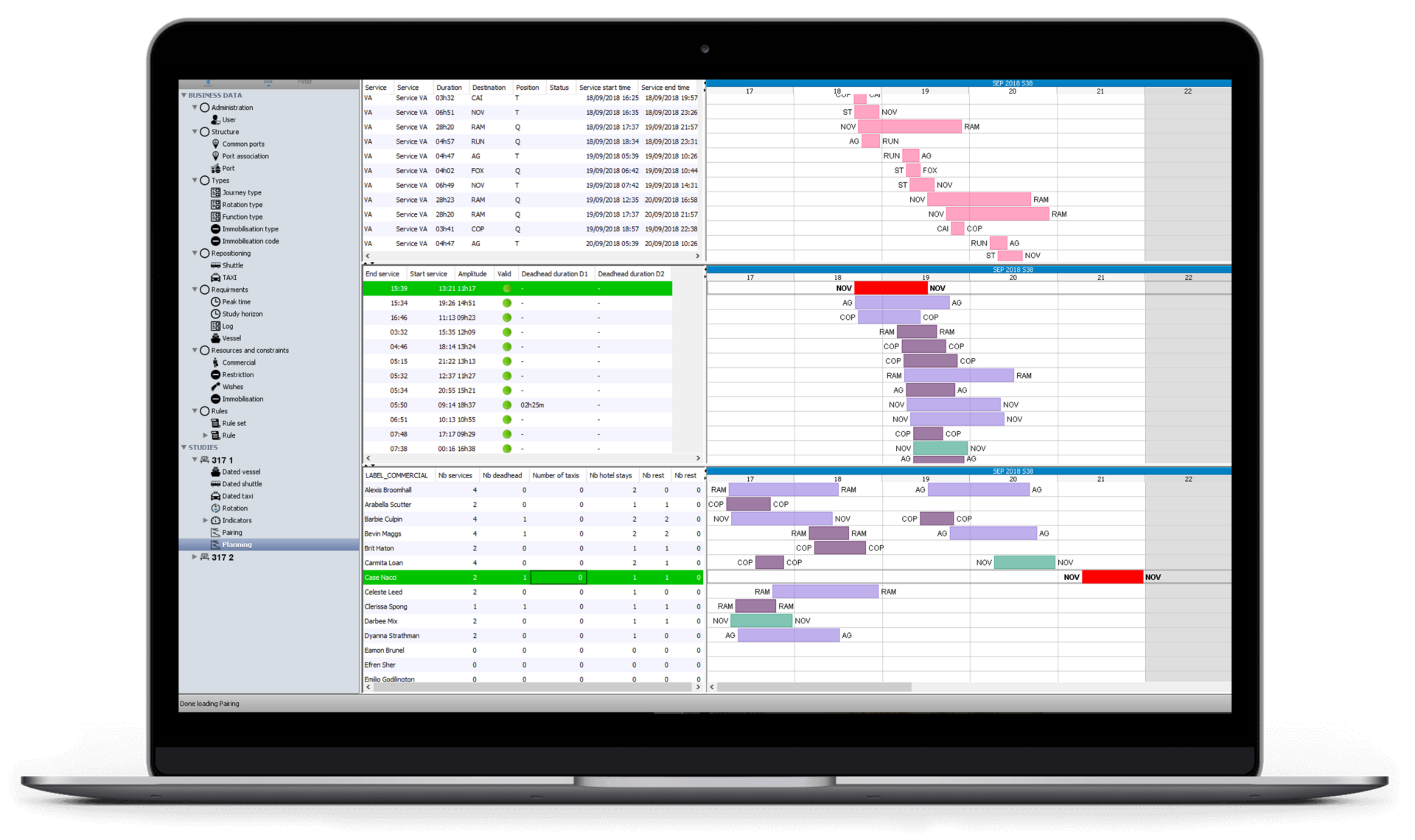
Plan your activities and resources under constraints
— Resource planning is a central issue for businesses to improve cost management, productivity and quality of service for the end customer.
Optimize your logistics flows
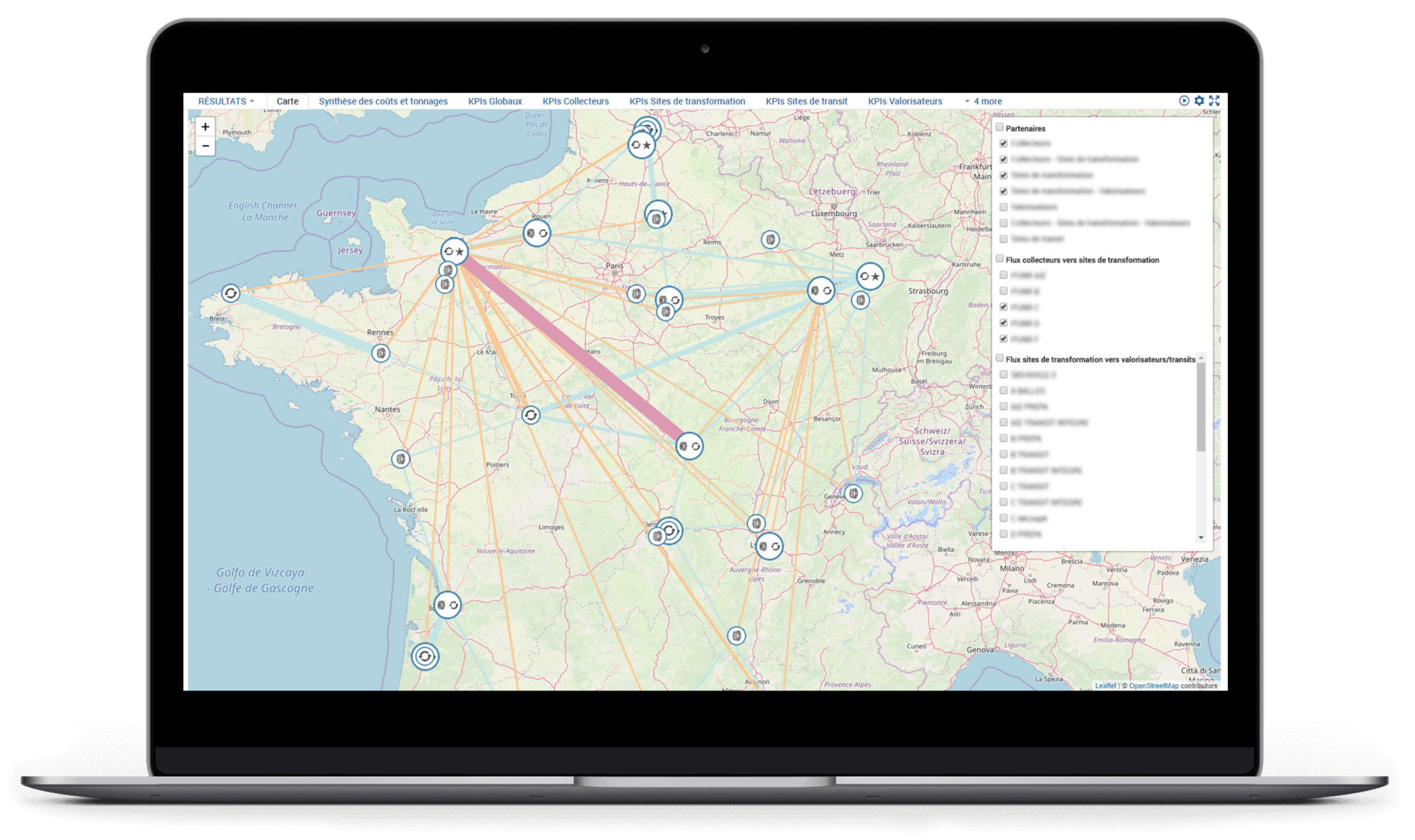
— Artelys Crystal Network Designer is a software solution dedicated to the optimization, sizing and analysis of logistics networks. It allows you to reduce your logistics costs as a whole, anticipate and manage your flows at different horizons as well as simulate scenarios on your network: from resizing to operational risk.
City
Super Grid
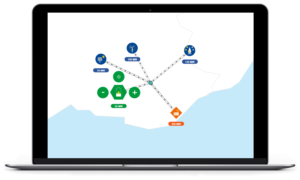
Energy Explorer
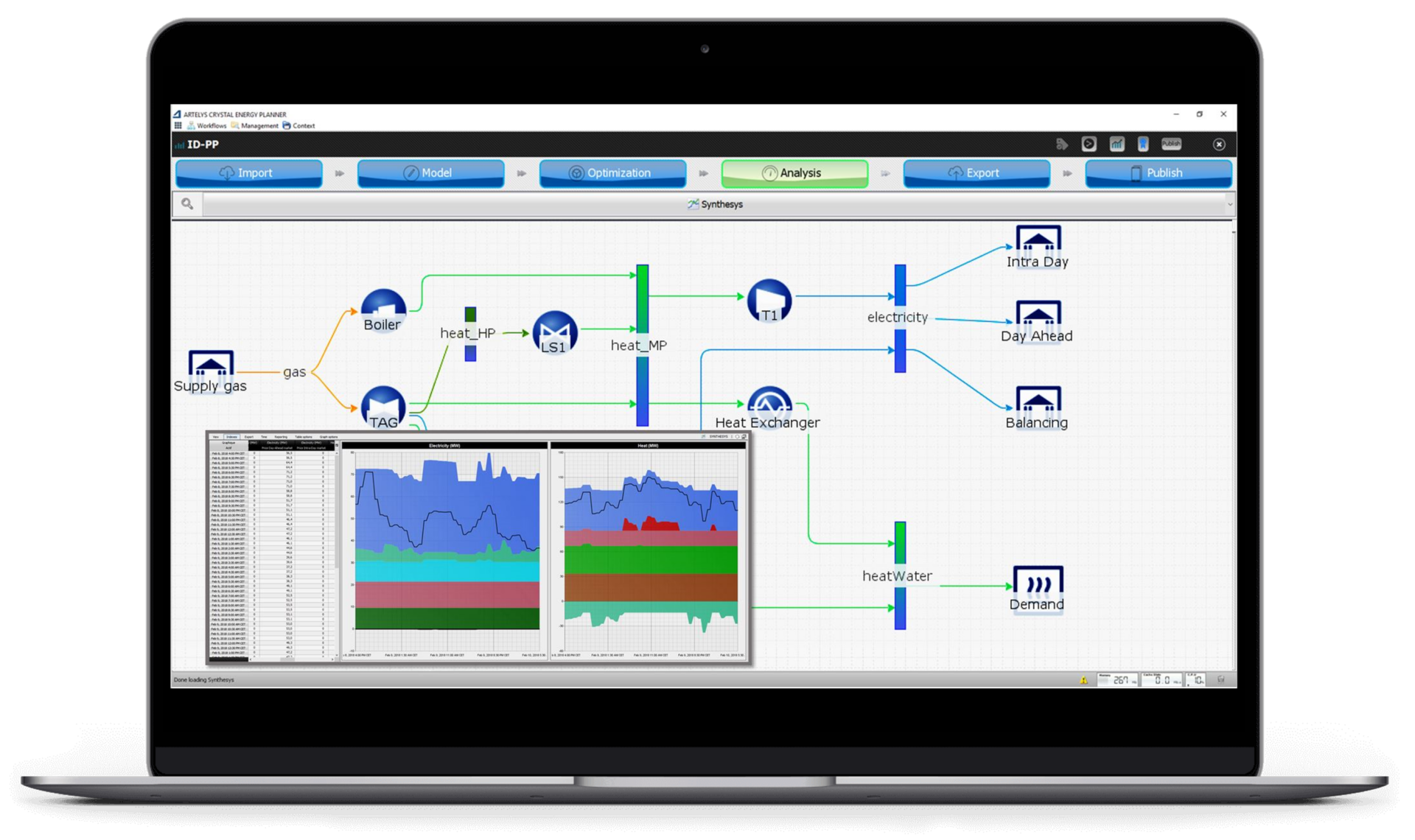
Energy Planner
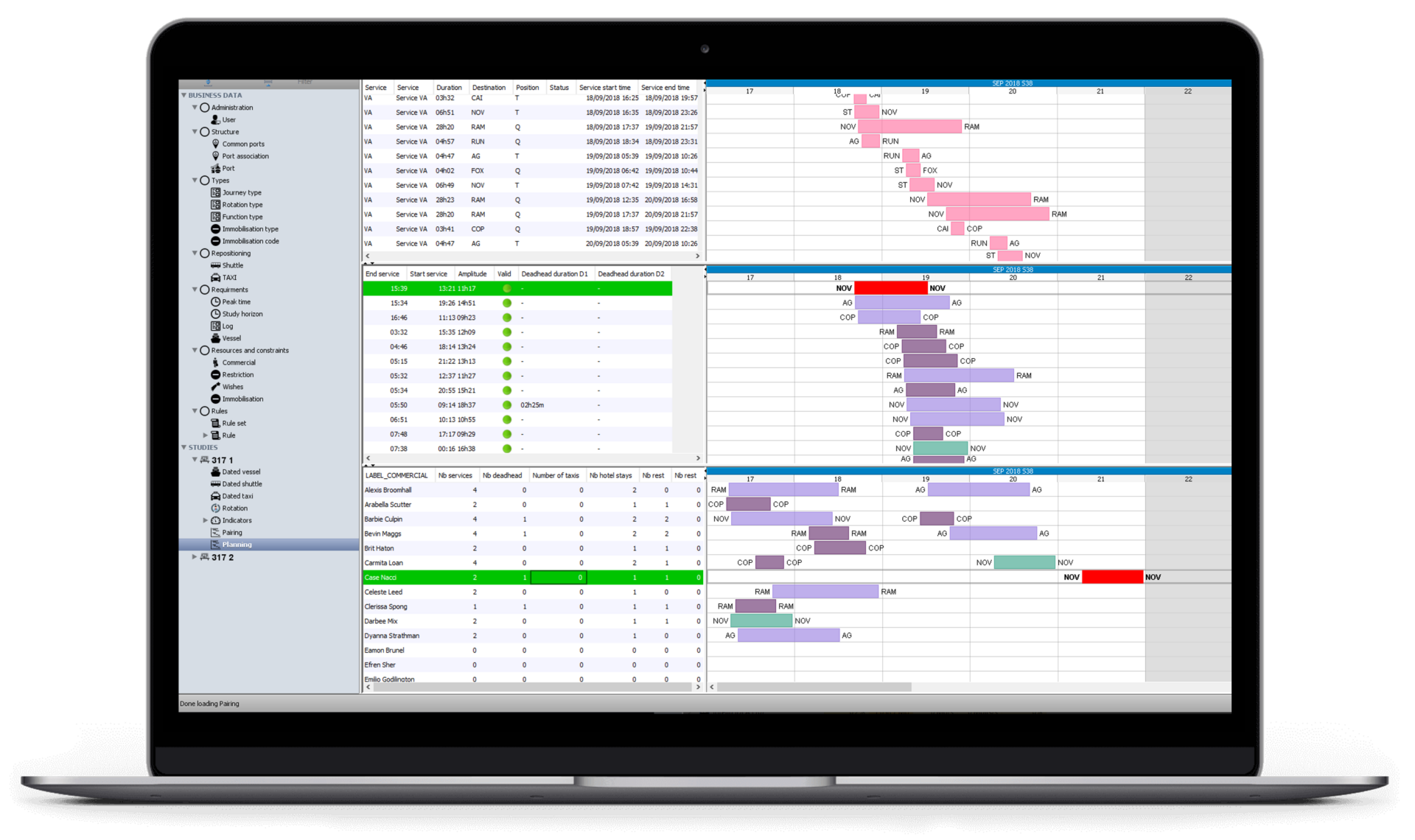
Resource Optimizer
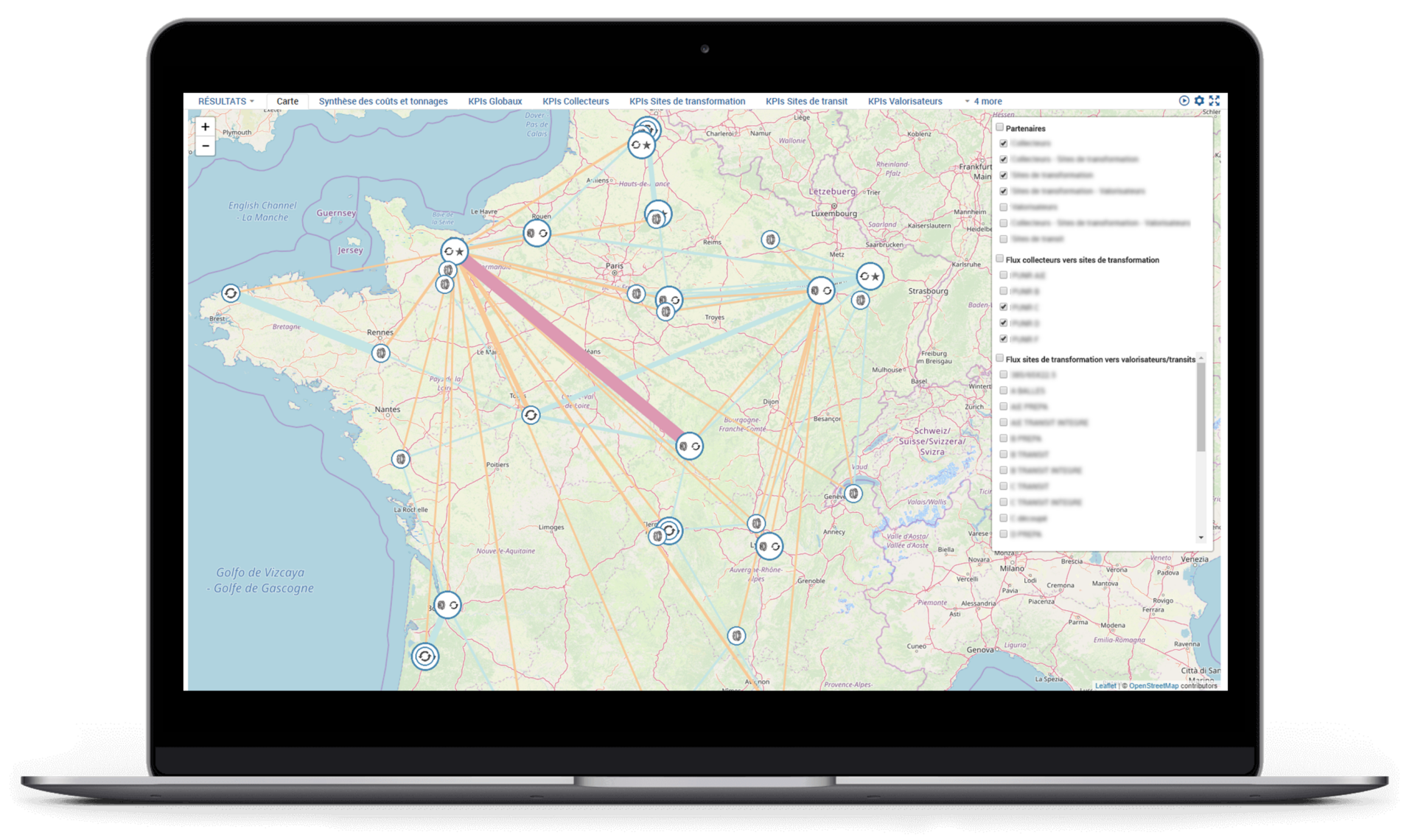
Network Designer
Decision support for territorial energy planning
— Artelys Crystal City is the reference tool for territorial energy planning. Its intuitive interface and advanced functions make it the ideal conductor to carry out the energy transition in the territories.
Optimization of interconnected systems
— Artelys Crystal Super Grid provides the quantitative elements to evaluate the costs and benefits of an energy strategy and to optimize it.
Operational management in short and medium term
— Artelys Crystal Energy Planner optimizes the short- and medium-term operational management of energy production assets. Operational planning, simplified and more reliable, becomes more competitive.
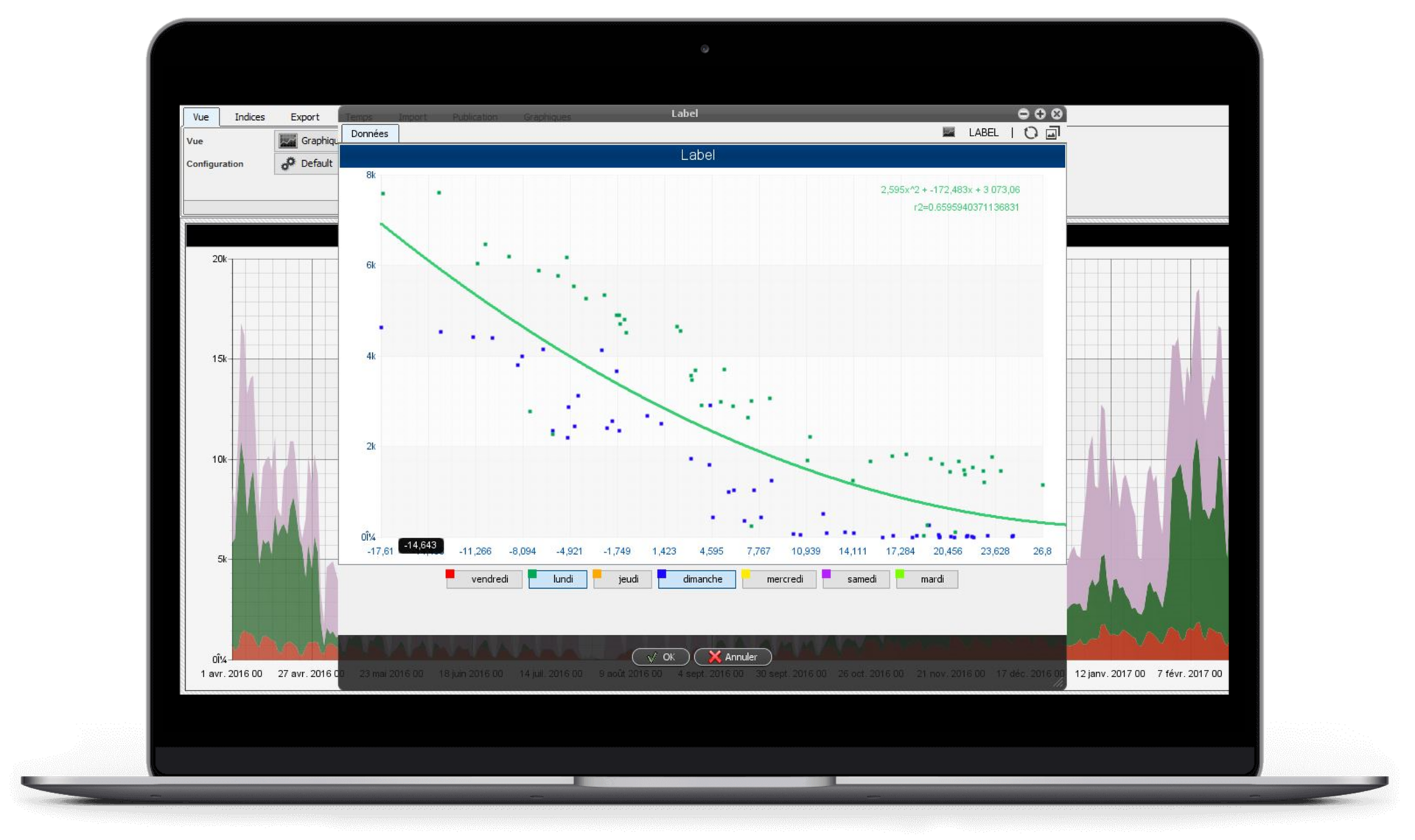
The best of statistical forecasting for your trades
— Artelys Crystal Forecast allows you to generate forecasts or scenarios of extreme reliability on short, medium and long term horizons to cover both your operational management needs and strategic planning.
Plan your activities and resources under constraints
— Resource planning is a central issue for businesses to improve cost management, productivity and quality of service for the end customer.
Optimize your logistics flows
— Artelys Crystal Network Designer is a software solution dedicated to the optimization, sizing and analysis of logistics networks. It allows you to reduce your logistics costs as a whole, anticipate and manage your flows at different horizons as well as simulate scenarios on your network: from resizing to operational risk.

Decision support for territorial energy planning
— Artelys Crystal City is the reference tool for territorial energy planning. Its intuitive interface and advanced functions make it the ideal conductor to carry out the energy transition in the territories.

Optimization of interconnected systems
— Artelys Crystal Super Grid provides the quantitative elements to evaluate the costs and benefits of an energy strategy and to optimize it.

Operational management in short and medium term
— Artelys Crystal Energy Planner optimizes the short- and medium-term operational management of energy production assets. Operational planning, simplified and more reliable, becomes more competitive.

The best of statistical forecasting for your trades
— Artelys Crystal Forecast allows you to generate forecasts or scenarios of extreme reliability on short, medium and long term horizons to cover both your operational management needs and strategic planning.

Plan your activities and resources under constraints
— Resource planning is a central issue for businesses to improve cost management, productivity and quality of service for the end customer.

Optimize your logistics flows
— Artelys Crystal Network Designer is a software solution dedicated to the optimization, sizing and analysis of logistics networks. It allows you to reduce your logistics costs as a whole, anticipate and manage your flows at different horizons as well as simulate scenarios on your network: from resizing to operational risk.

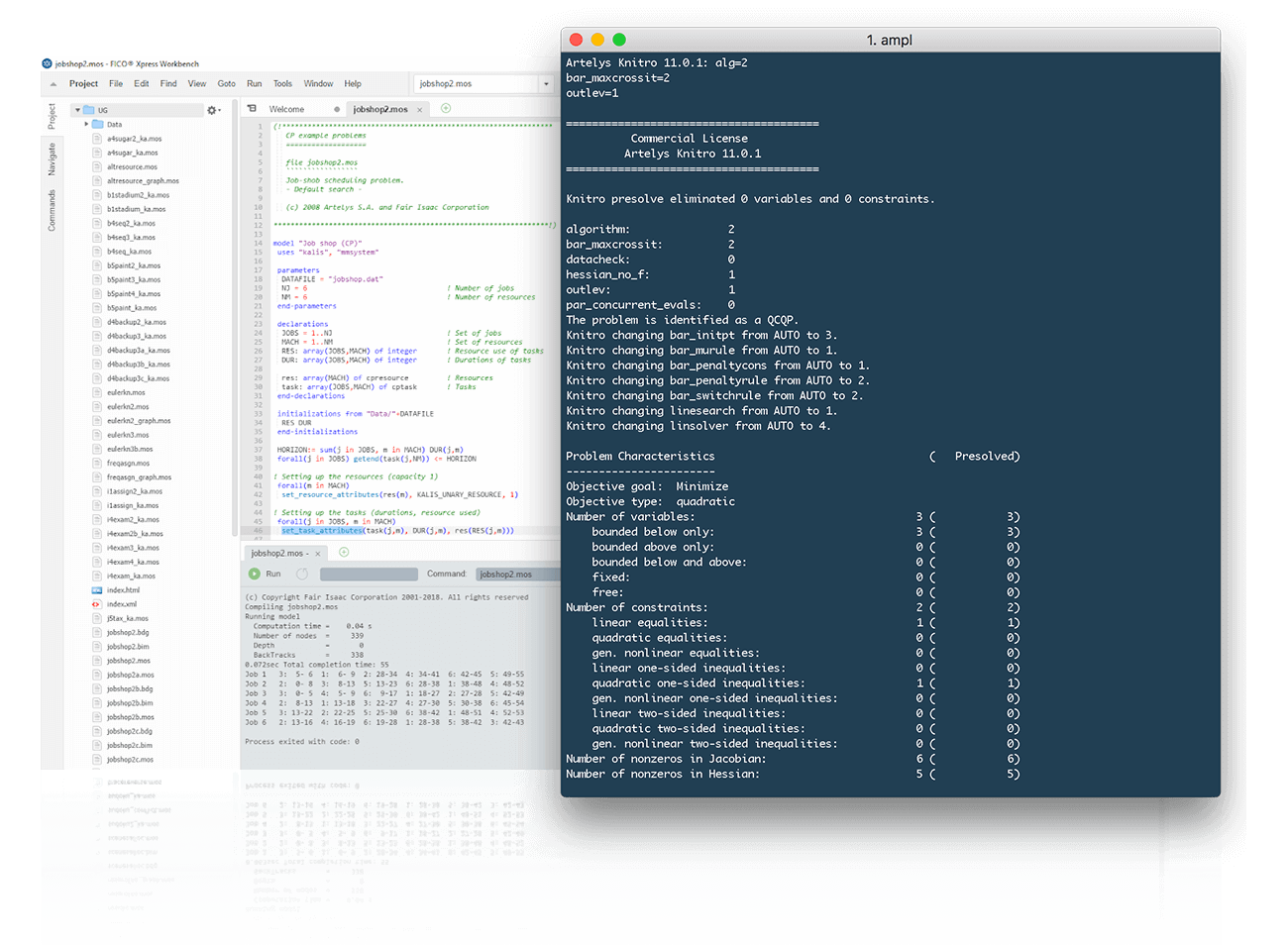
Numerical components that give you a head start
— Whether it is to model the complex problems that our customers are submitting to us or to provide the Artelys Crystal suite with the most powerful optimization engine, we rely on the most advanced mathematical programming tools in their respective fields.

Numerical components that give you a head start
— Whether it is to model the complex problems that our customers are submitting to us or to provide the Artelys Crystal suite with the most powerful optimization engine, we rely on the most advanced mathematical programming tools in their respective fields.
reports
— Discover the results of the technico-economic studies carried out on behalf of our customers using the modeling platform Artelys Crystal.
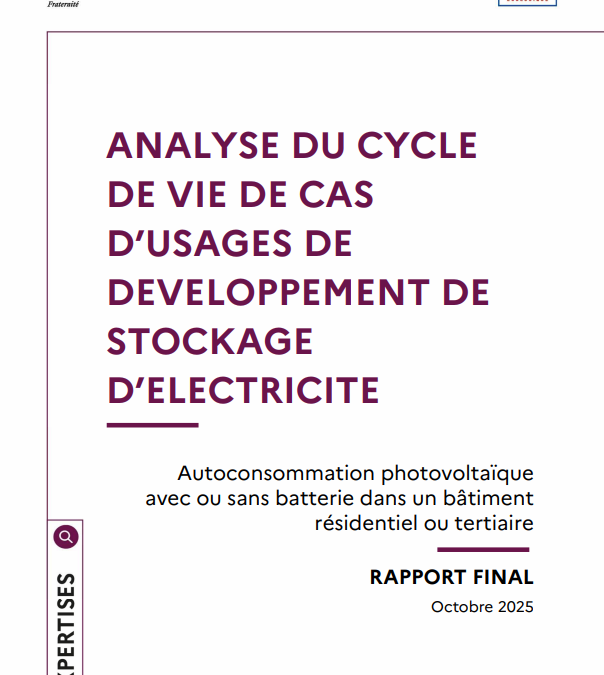
Life cycle analysis of electricity storage use cases – Self-consumption
ADEME commissioned Artelys and Gingko21 to conduct a life cycle analysis of use cases for the development of electricity storage. For each use case, Artelys studied the impact of adding storage to the electrical system. This impact is then translated into a life cycle analysis by Gingko21 in order to determine the environmental impact of the storage system.
This initial study focuses on the addition of photovoltaic panels for self-consumption, with or without an associated battery storage system, for a single building. The analysis is carried out for two types of buildings (a residential house or an office building) in different geographical areas (France, studied here on the Mediterranean coast – climate zone H3 –, Martinique and Réunion). This study is carried out in a comparative manner to better understand the effects of self-consumption with storage on different electrical systems. The impacts assessed are therefore those resulting from the addition of photovoltaics with or without storage, without seeking to quantify the environmental impacts of all the electricity consumed by the modelled building. In order to assess the impact of different production systems on the electrical system, Artelys modelled the electricity mixes for each geographical area and the buildings studied using Artelys Crystal Super Grid software.
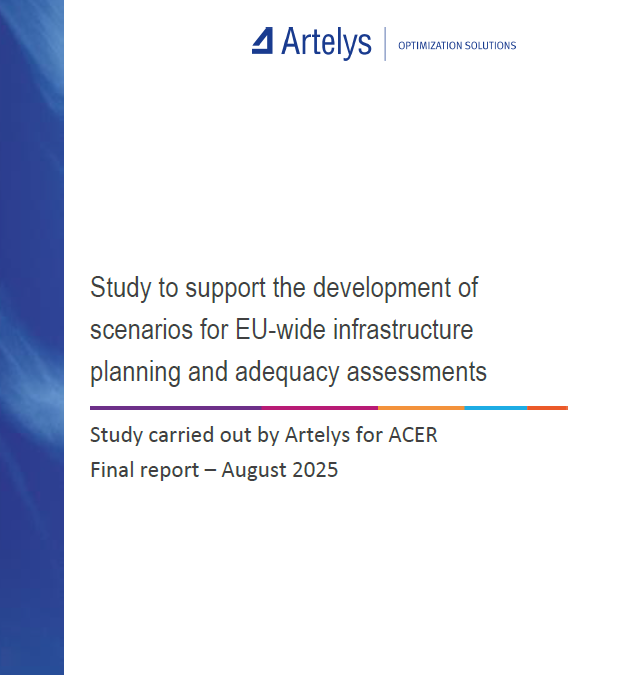
Study to support the development of scenarios for EU-wide infrastructure planning and adequacy assessments
Scenarios are key necessary ingredients to identify future infrastructure needs and to inform adequacy measures that need to be put in place. The EU-wide Ten-Year Network Development Plans (TYNDPs) and European Resource Adequacy Assessments (ERAAs) are important tools to inform the required evolutions of the energy sector and are based on the use of scenarios.
Artelys has been selected to study the set of tools and best practices to be followed for the ERAA and TYNDPs’ scenarios development process. The activities included:
(i) Organisation of surveys to all EU gas and electricity TSOs, as well as to all EU NRAs.
(ii) Interviews of various stakeholders involved in the scenario development process (ENTSO-E, ENTSOG, the European Commission, the TYNDP Stakeholder Reference Group, some TSOs).
(iii) Literature review of the documentation related to ERAA and TYNDP scenario building (including ENTSOs’ documentation, regulatory framework, ACER’s methodologies and guidelines).
(iv) Benchmark of processes followed by 6 other institutions when developing their scenarios.
This work resulted in a comprehensive report proposing 25 recommendations for improving the TYNDP and ERAA scenario building processes.
Assessment of Policy Options for Securing Inertia
The European Commission’s DG ENER selected Artelys to analyse solutions for ensuring the frequency stability of the European electricity system in the future. This study analyses the role of inertia and its evolution in the context of asynchronous renewable energy deployment. This work establishes a shared understanding of inertia’s role in power system stability.
The literature review carried out by Artelys focuses on the challenges and risks associated with frequency stability in the electricity system, the definition of inertia, the specification of the physical quantities required to ensure this stability, the fundamentals determining inertia requirements and the definition of associated services. Artelys also analysed the foreseeable evolution of inertia requirements with the energy transition, as well as the existing inertia and fast reserve markets.
Artelys carried out this study with Tractebel ENGIE and Trinomics. Tractebel ENGIE conducted a technology review and a complementary assessment of inertia requirements. Trinomics analysed approaches to securing the supply of inertia and recovering the associated costs. A set of recommendations was formulated for DG ENER.
The potential for renewable and low-carbon gas deployment and impact on enabling infrastructure development for the Baltic Sea Region
This study explores the integration of renewable and low-carbon gases within the Baltic Energy Market Interconnection Plan (BEMIP) region, which includes Denmark, Estonia, Finland, Germany, Latvia, Lithuania, Poland, and Sweden. It evaluates the economic and technical potential for both the supply and demand of these gases, investigates the current infrastructure and policy landscape, and analyses the barriers—technical, safety-related, and economic—to developing biomethane and hydrogen infrastructure. Additionally, it identifies the infrastructure requirements for hydrogen and methane to support the transition and concludes with targeted recommendations to address the challenges identified.
Artelys has delivered a model-based analysis of hydrogen and methane infrastructure needs in the region, leveraging the multi-energy capabilities of the Artelys Crystal Super Grid software solution
training
— Take advantage of the skills and experience acquired by Artelys consultants thanks to an original training offer, conceived as a real instrument for sharing knowledge.


subscribe to our newsletters


© ARTELYS • All rights reserved • Legal mentions