


all your optimization solutions
Put mathematical programming and artificial intelligence at the service of efficiency
news
Artelys participates in the demonstration of large-scale underground hydrogen storage in Europe
— Artelys is involved in the five-year project FrHyGe funded by the European Commission via the Clean Hydrogen Partnership.
Artelys continues to expand internationally
With over 20 years of experience in mathematical optimization, Artelys offers a wide range of advanced components to adapt to your most complex challenges on an international scale.
Analysis of the environmental impact of renewable energies
— The study carried out by Artelys highlights the benefits of renewable energies in the fight against climate change. The analysis also looks at other major issues, such as biodiversity, the use of raw materials and the reduction of pollution.
solutions
— Relying on their high level of expertise in quantitative methods, our consultants deliver efficient solutions to complex business problems that best meet the needs of our clients.

Strong skills in Operational Research, Modeling and Decision Support

Recognized know-how in scientific consulting and project management

A business experience of energy, transport and logistics issues

Mastery of methods and tools for numerical optimization and statistical analysis

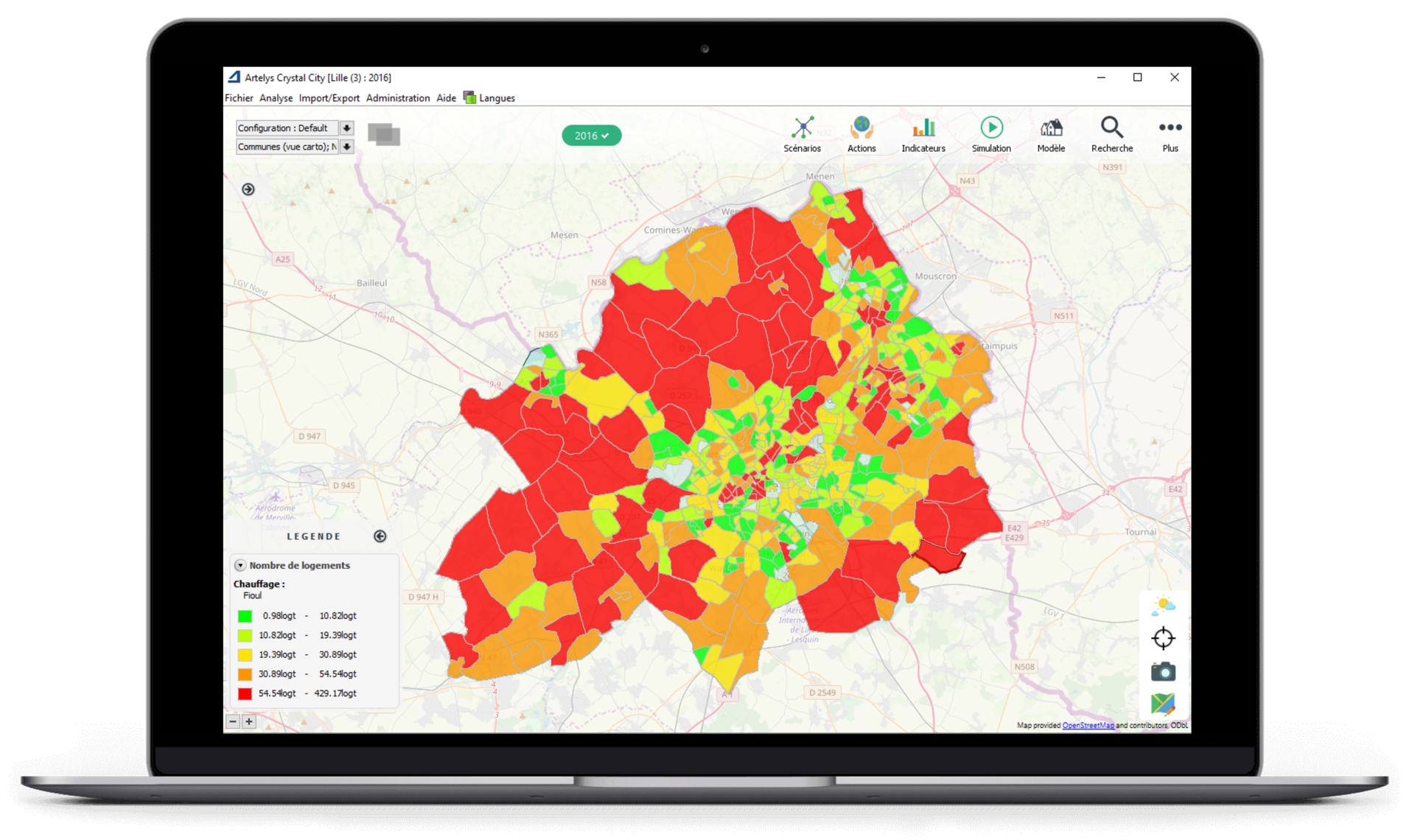

Decision support for territorial energy planning
— Artelys Crystal City is the reference tool for territorial energy planning. Its intuitive interface and advanced functions make it the ideal conductor to carry out the energy transition in the territories.
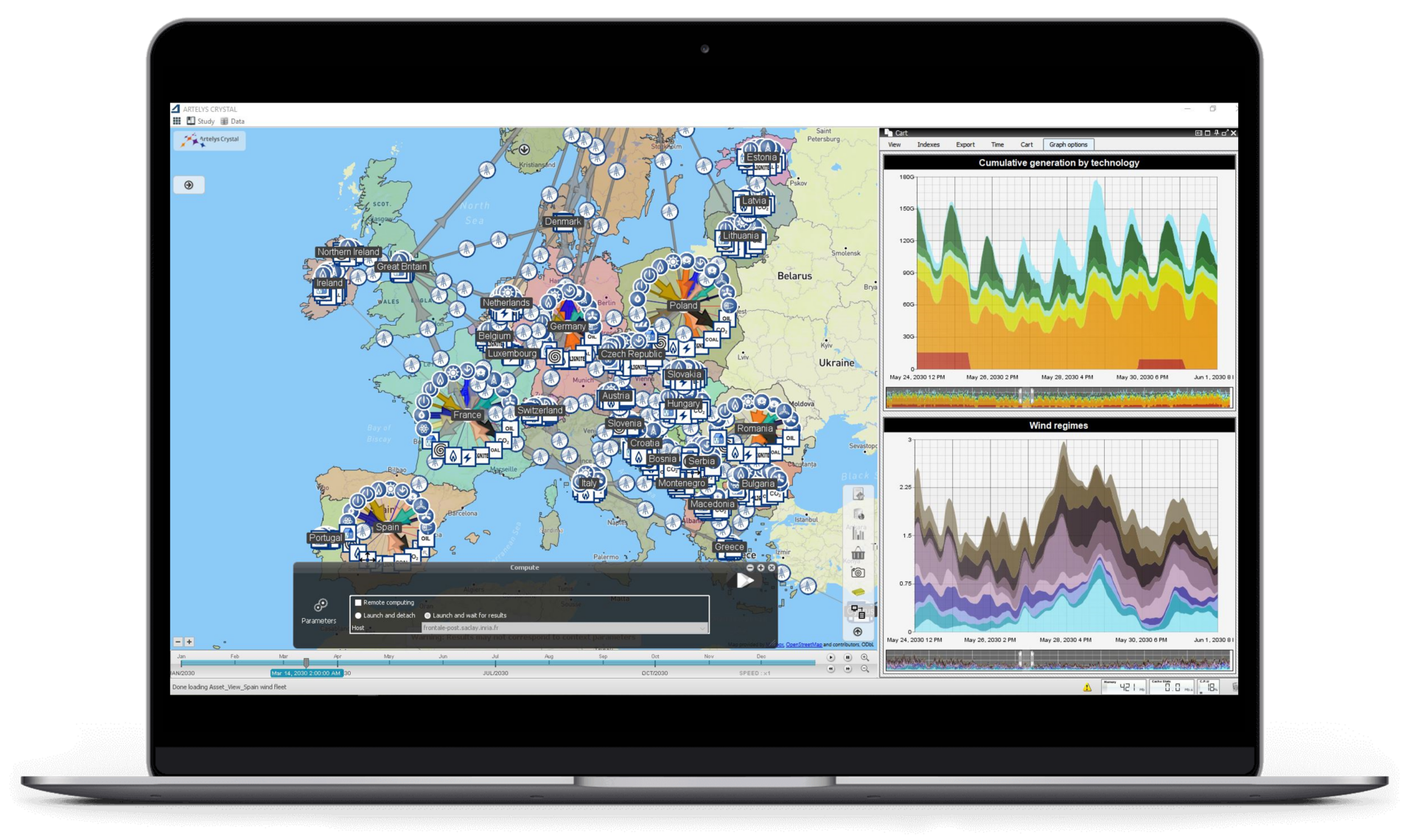

Optimization of interconnected systems
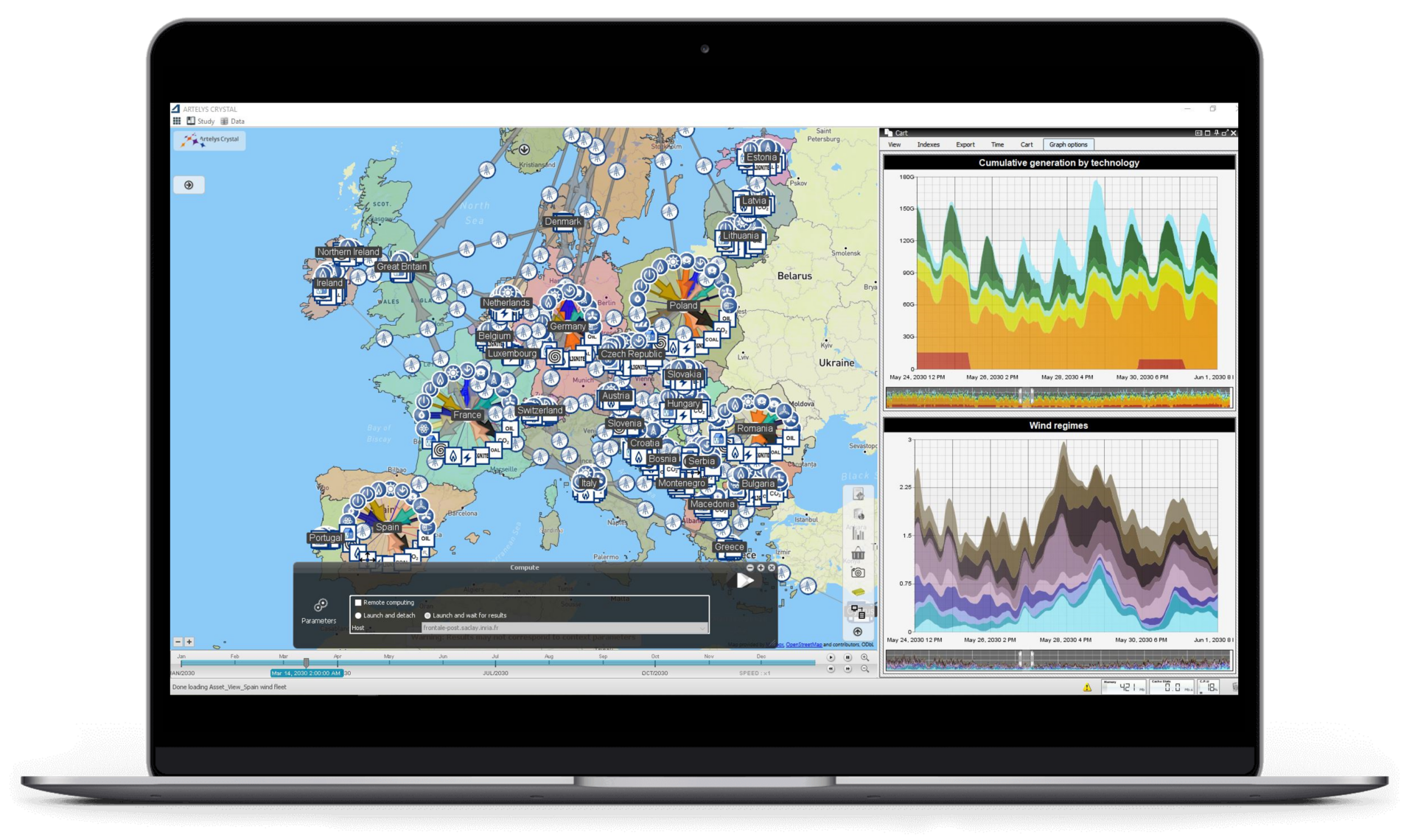
— Artelys Crystal Super Grid provides the quantitative elements to evaluate the costs and benefits of an energy strategy and to optimize it.
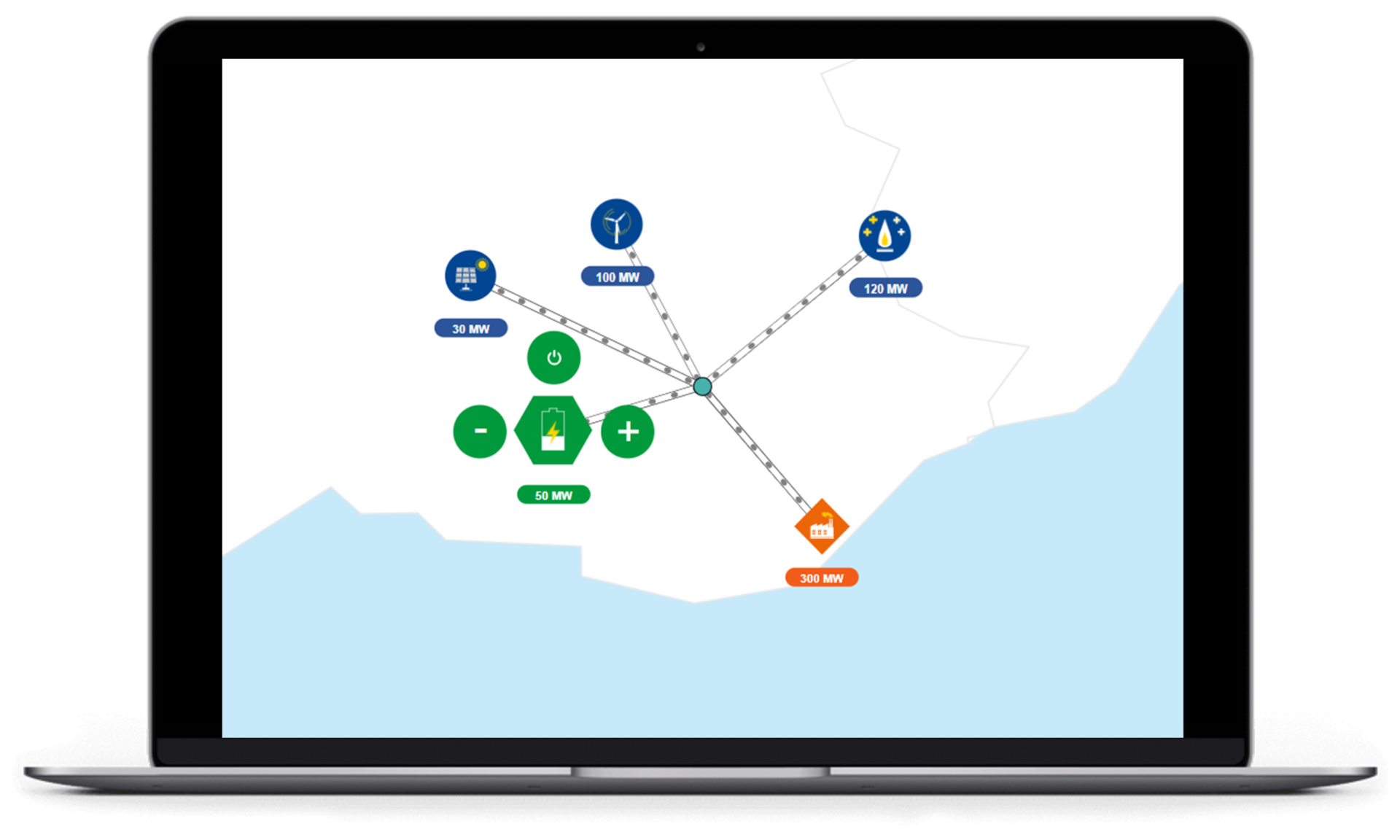

A digital twin to gain insights into the role of networks in the energy transition
— Energy infrastructures are the key to ensure the proper performance of the system. Once the production is settled, network management raises many complex issues in order to guarantee the efficient distribution of energy.
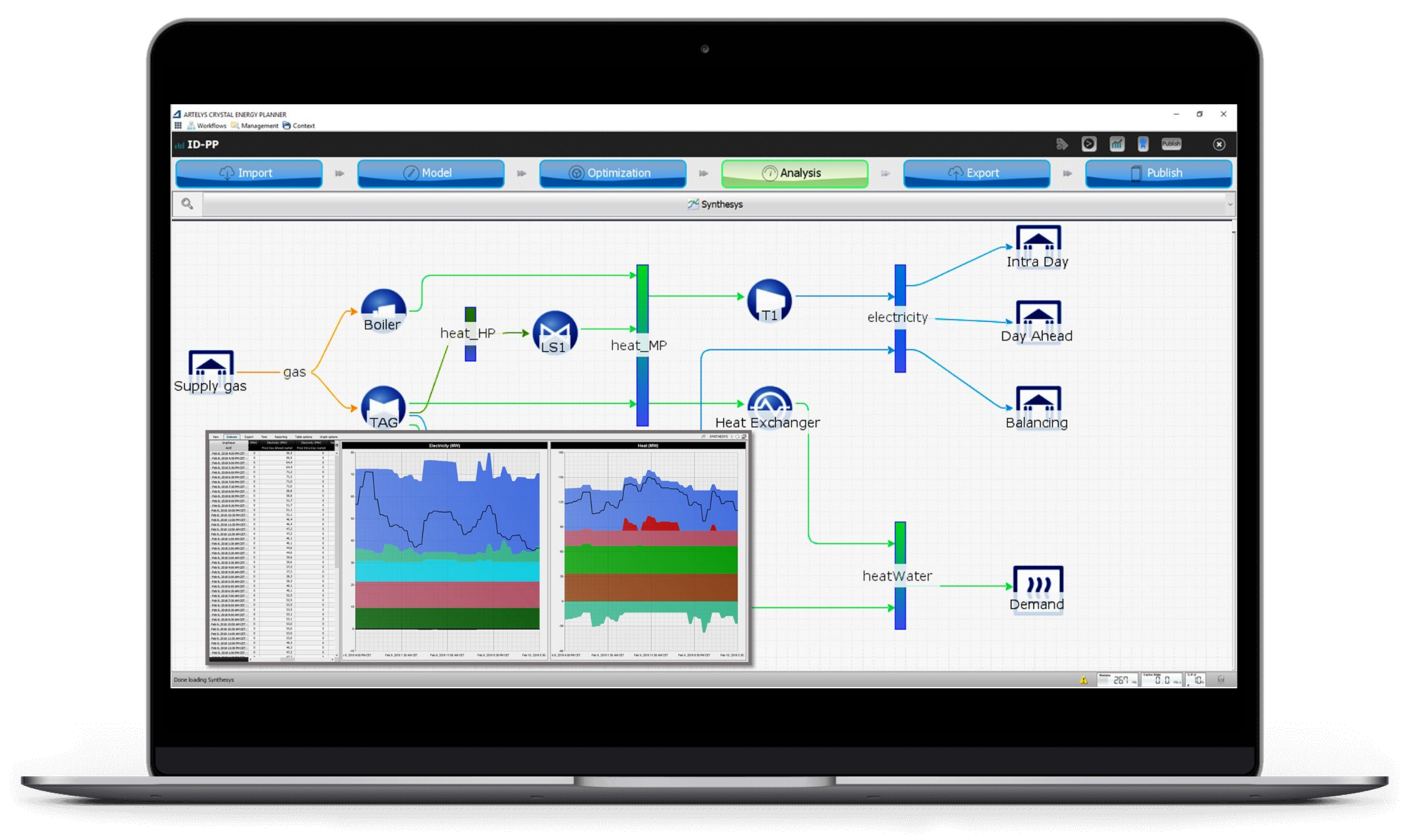

Operational management in short and medium term
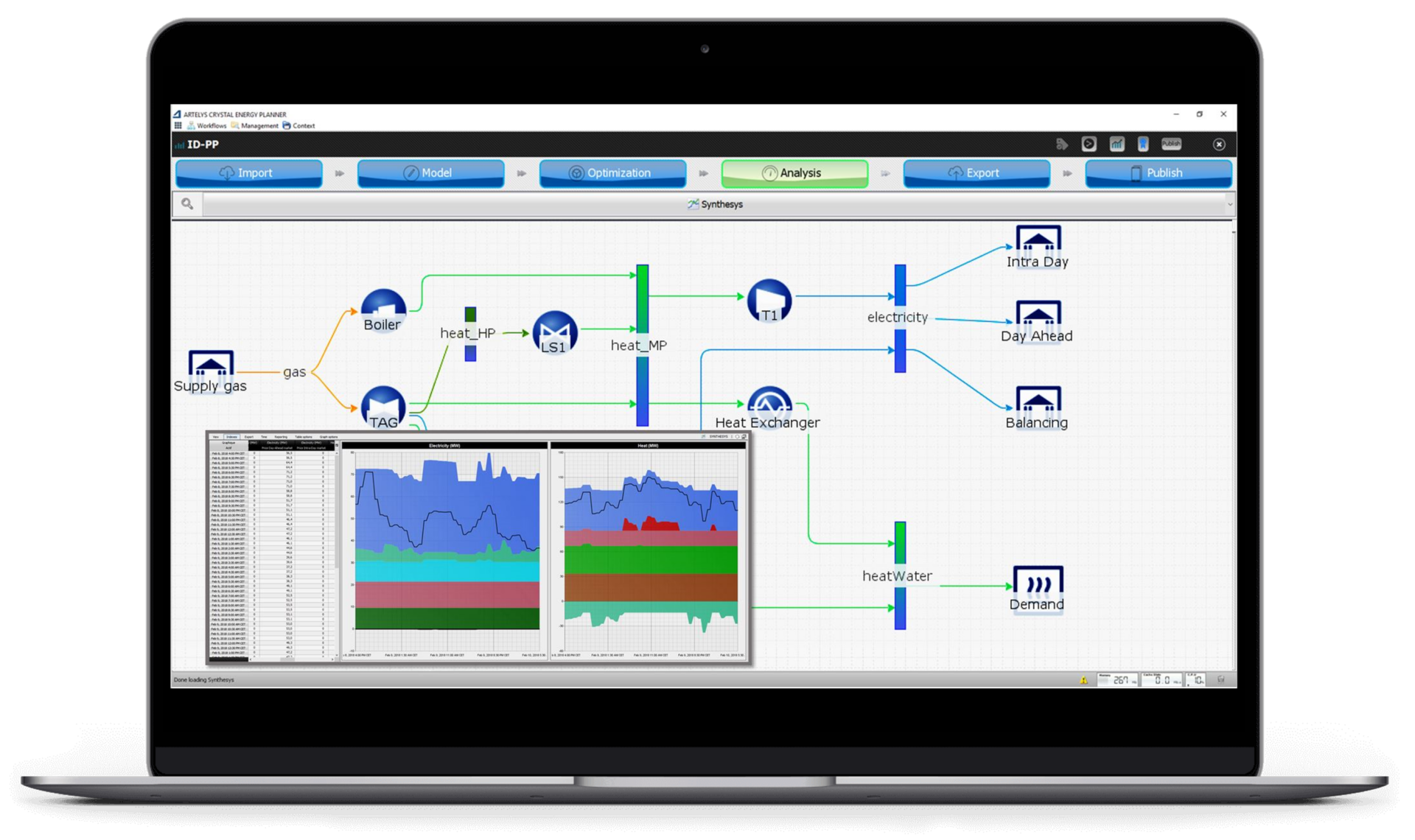
— Artelys Crystal Energy Planner optimizes the short- and medium-term operational management of energy production assets. Operational planning, simplified and more reliable, becomes more competitive.
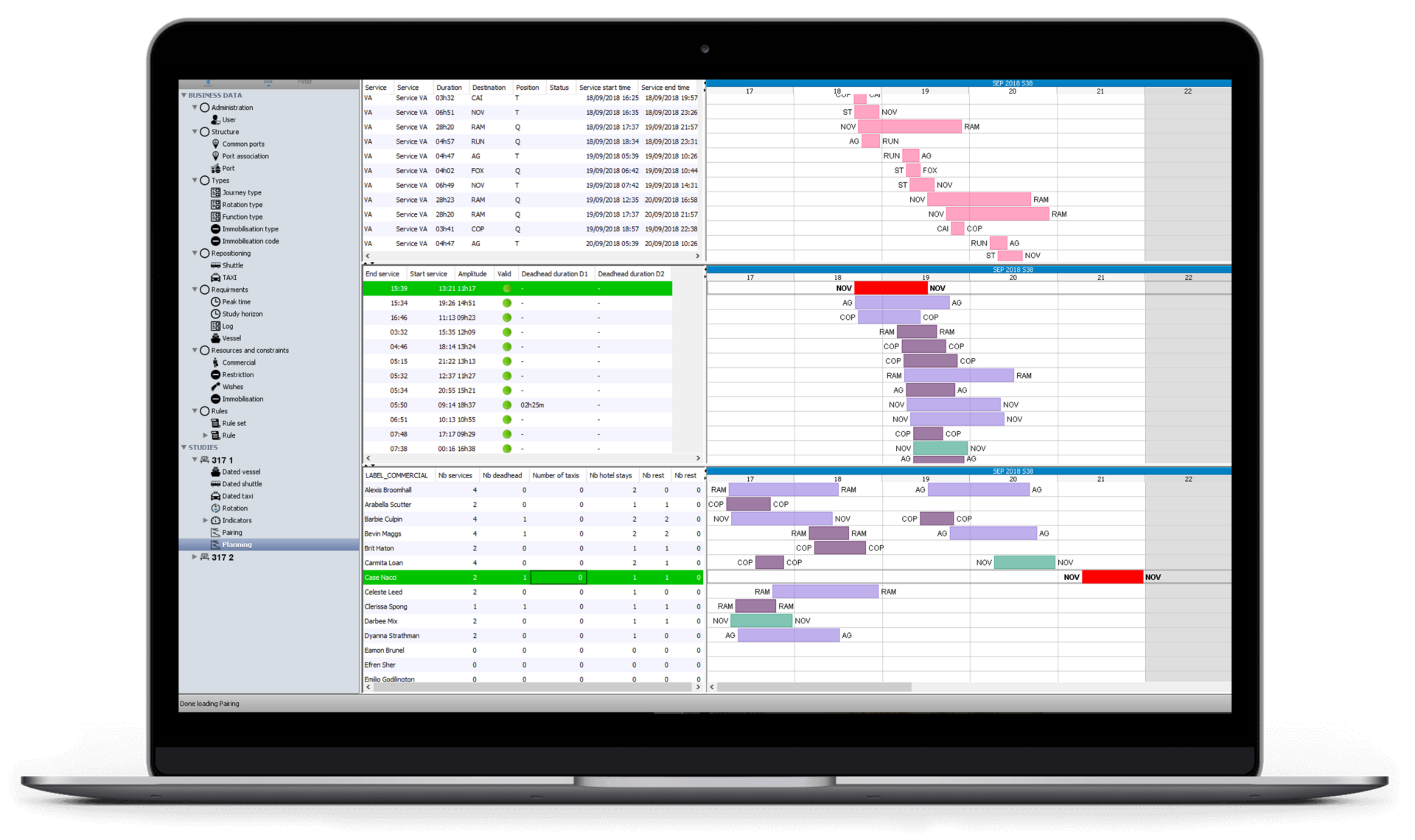
Plan your activities and resources under constraints
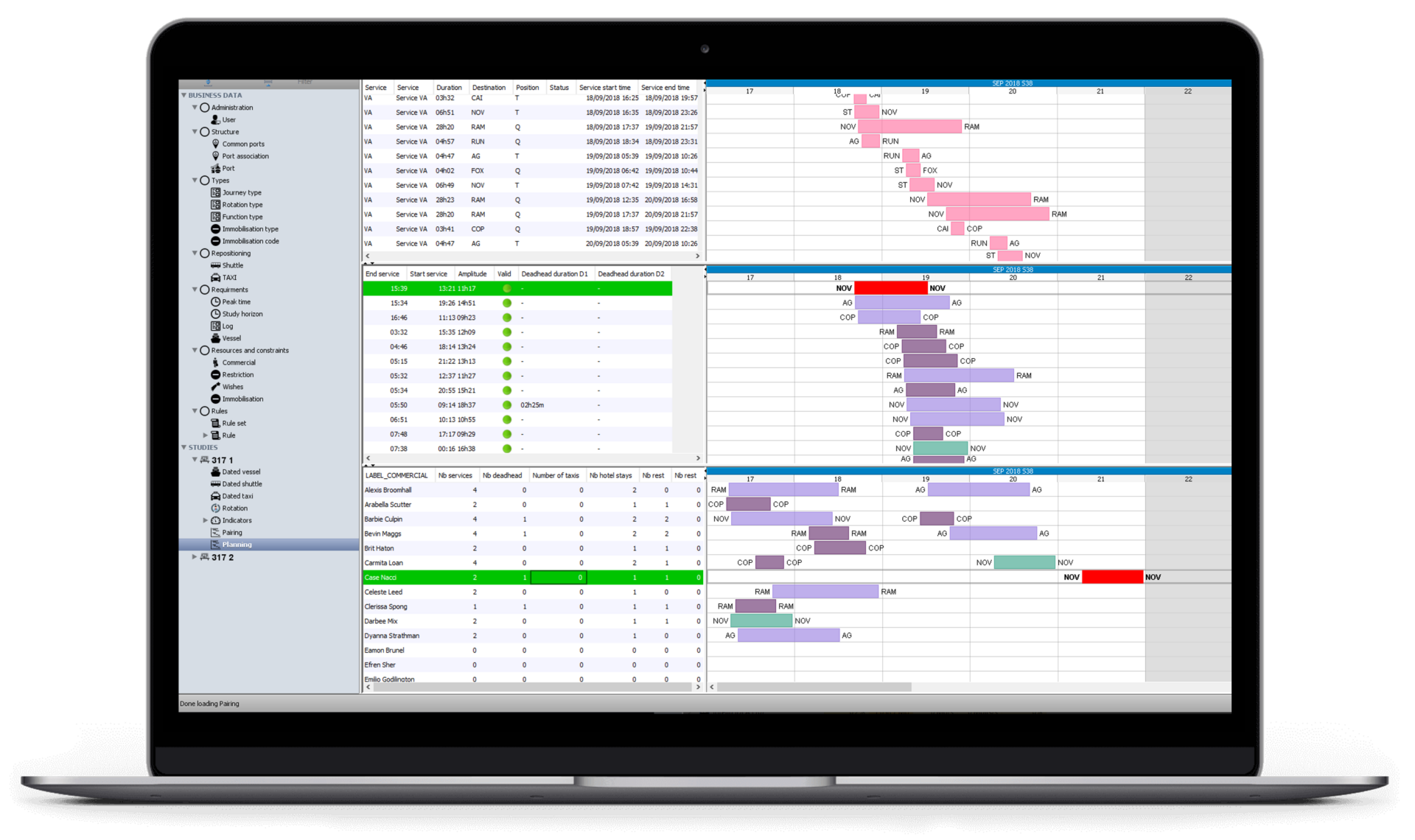
— Resource planning is a central issue for businesses to improve cost management, productivity and quality of service for the end customer.
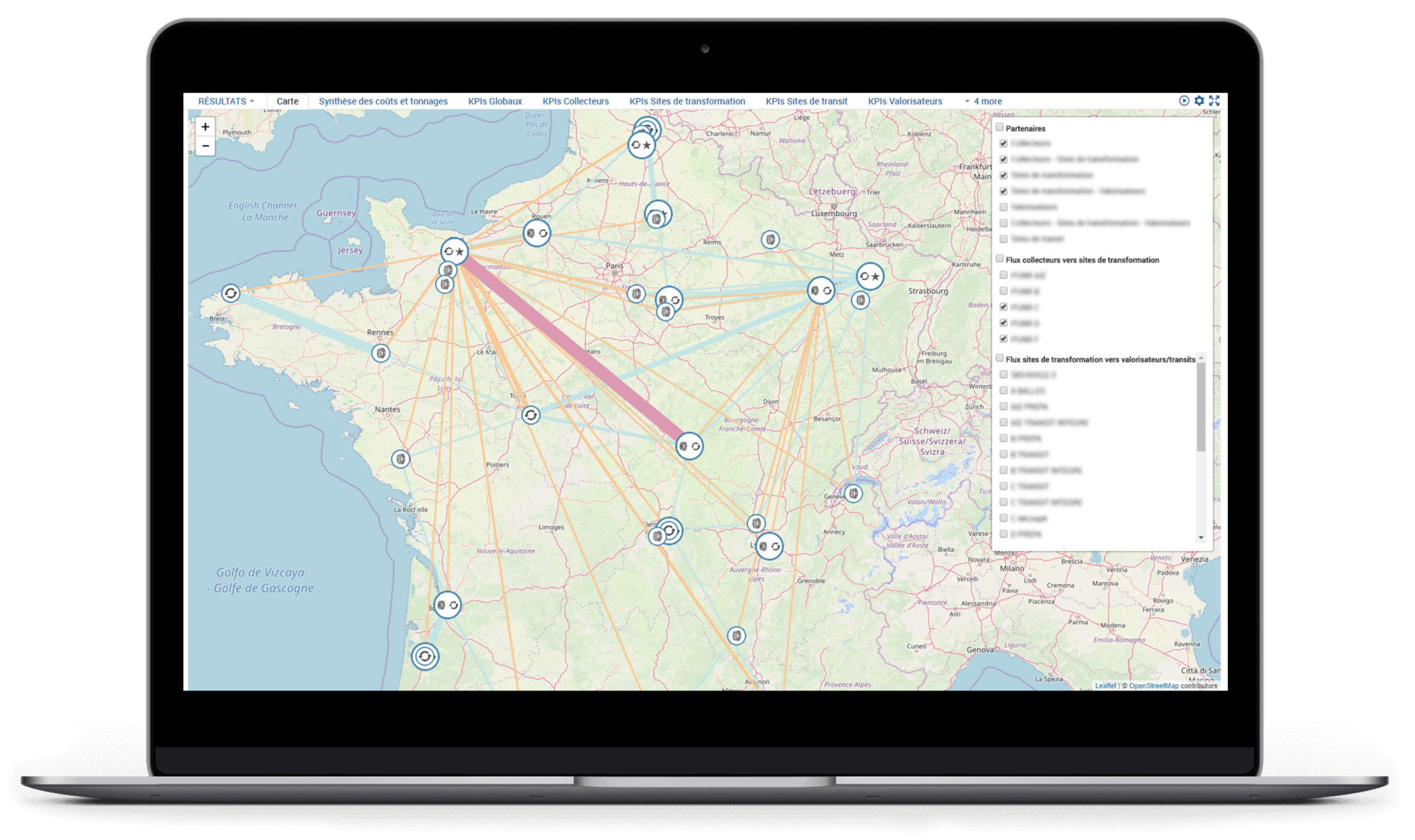

Optimize your logistics flows
— Artelys Crystal Network Designer is a software solution dedicated to the optimization, sizing and analysis of logistics networks. It allows you to reduce your logistics costs as a whole, anticipate and manage your flows at different horizons as well as simulate scenarios on your network: from resizing to operational risk.
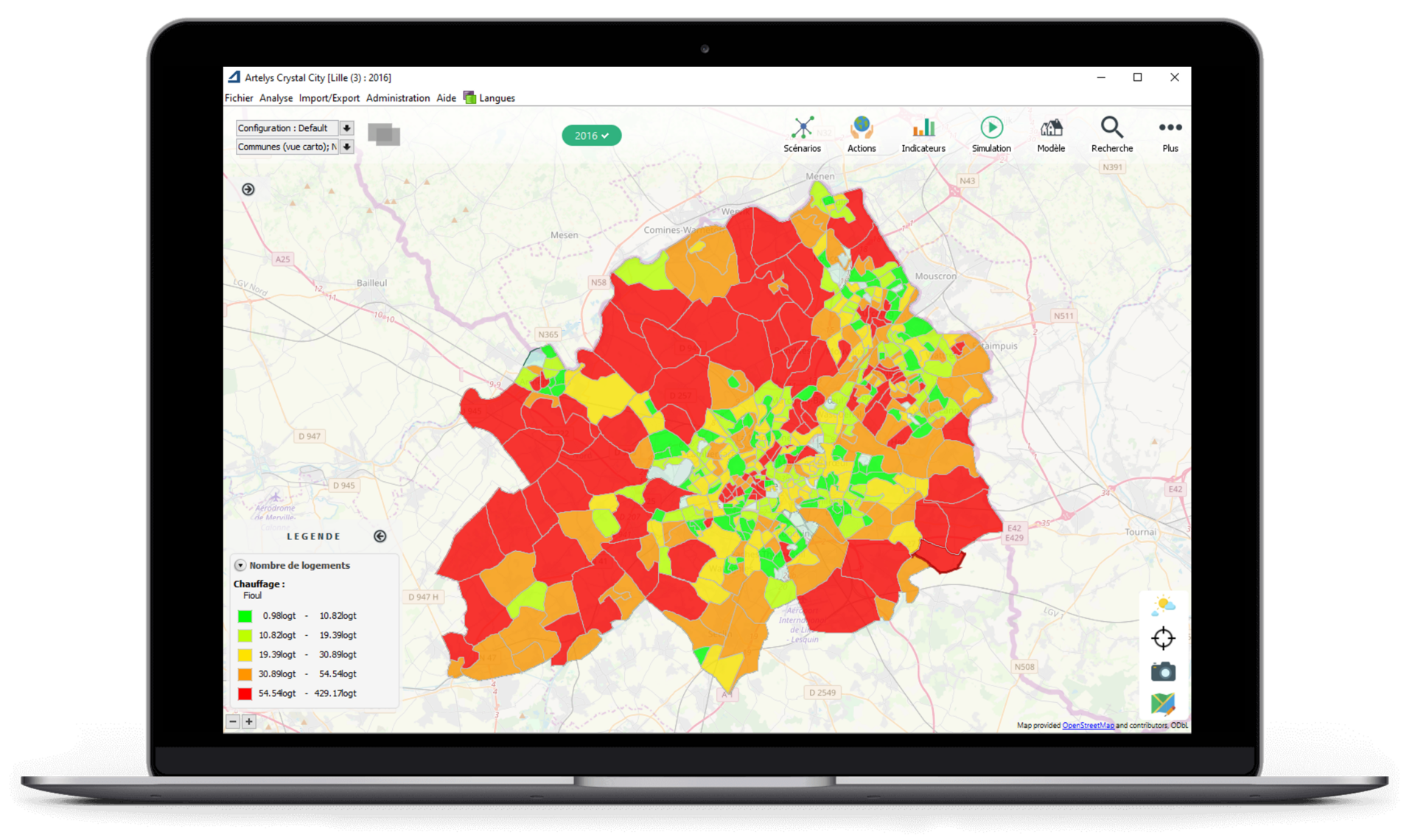
City
Super Grid
Energy Explorer
Energy Planner
Resource Optimizer
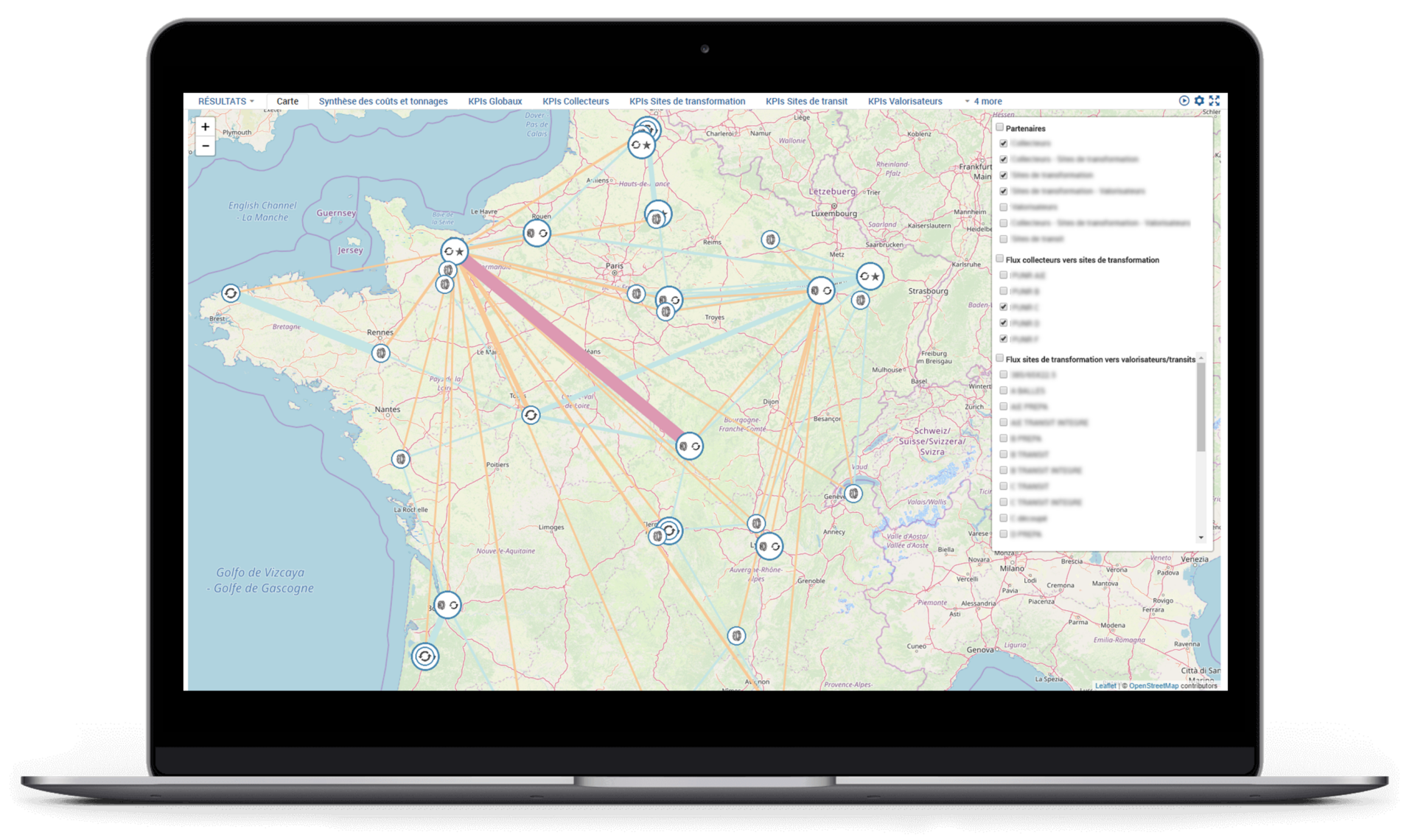
Network Designer
Decision support for territorial energy planning
— Artelys Crystal City is the reference tool for territorial energy planning. Its intuitive interface and advanced functions make it the ideal conductor to carry out the energy transition in the territories.
Optimization of interconnected systems
— Artelys Crystal Super Grid provides the quantitative elements to evaluate the costs and benefits of an energy strategy and to optimize it.
Operational management in short and medium term
— Artelys Crystal Energy Planner optimizes the short- and medium-term operational management of energy production assets. Operational planning, simplified and more reliable, becomes more competitive.
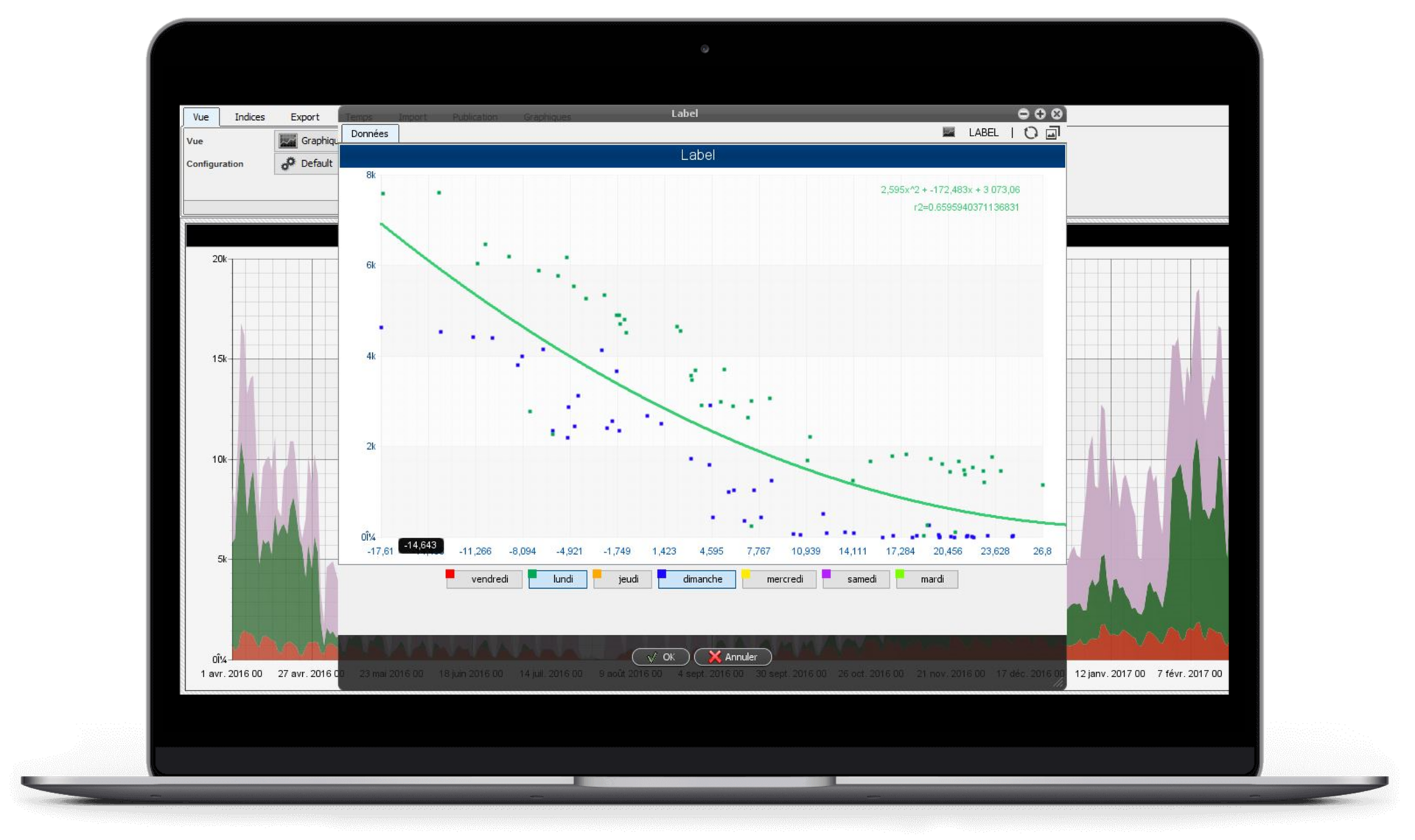

The best of statistical forecasting for your trades
— Artelys Crystal Forecast allows you to generate forecasts or scenarios of extreme reliability on short, medium and long term horizons to cover both your operational management needs and strategic planning.
Plan your activities and resources under constraints
— Resource planning is a central issue for businesses to improve cost management, productivity and quality of service for the end customer.
Optimize your logistics flows
— Artelys Crystal Network Designer is a software solution dedicated to the optimization, sizing and analysis of logistics networks. It allows you to reduce your logistics costs as a whole, anticipate and manage your flows at different horizons as well as simulate scenarios on your network: from resizing to operational risk.

Decision support for territorial energy planning
— Artelys Crystal City is the reference tool for territorial energy planning. Its intuitive interface and advanced functions make it the ideal conductor to carry out the energy transition in the territories.

Optimization of interconnected systems
— Artelys Crystal Super Grid provides the quantitative elements to evaluate the costs and benefits of an energy strategy and to optimize it.

Operational management in short and medium term
— Artelys Crystal Energy Planner optimizes the short- and medium-term operational management of energy production assets. Operational planning, simplified and more reliable, becomes more competitive.

The best of statistical forecasting for your trades
— Artelys Crystal Forecast allows you to generate forecasts or scenarios of extreme reliability on short, medium and long term horizons to cover both your operational management needs and strategic planning.

Plan your activities and resources under constraints
— Resource planning is a central issue for businesses to improve cost management, productivity and quality of service for the end customer.

Optimize your logistics flows
— Artelys Crystal Network Designer is a software solution dedicated to the optimization, sizing and analysis of logistics networks. It allows you to reduce your logistics costs as a whole, anticipate and manage your flows at different horizons as well as simulate scenarios on your network: from resizing to operational risk.

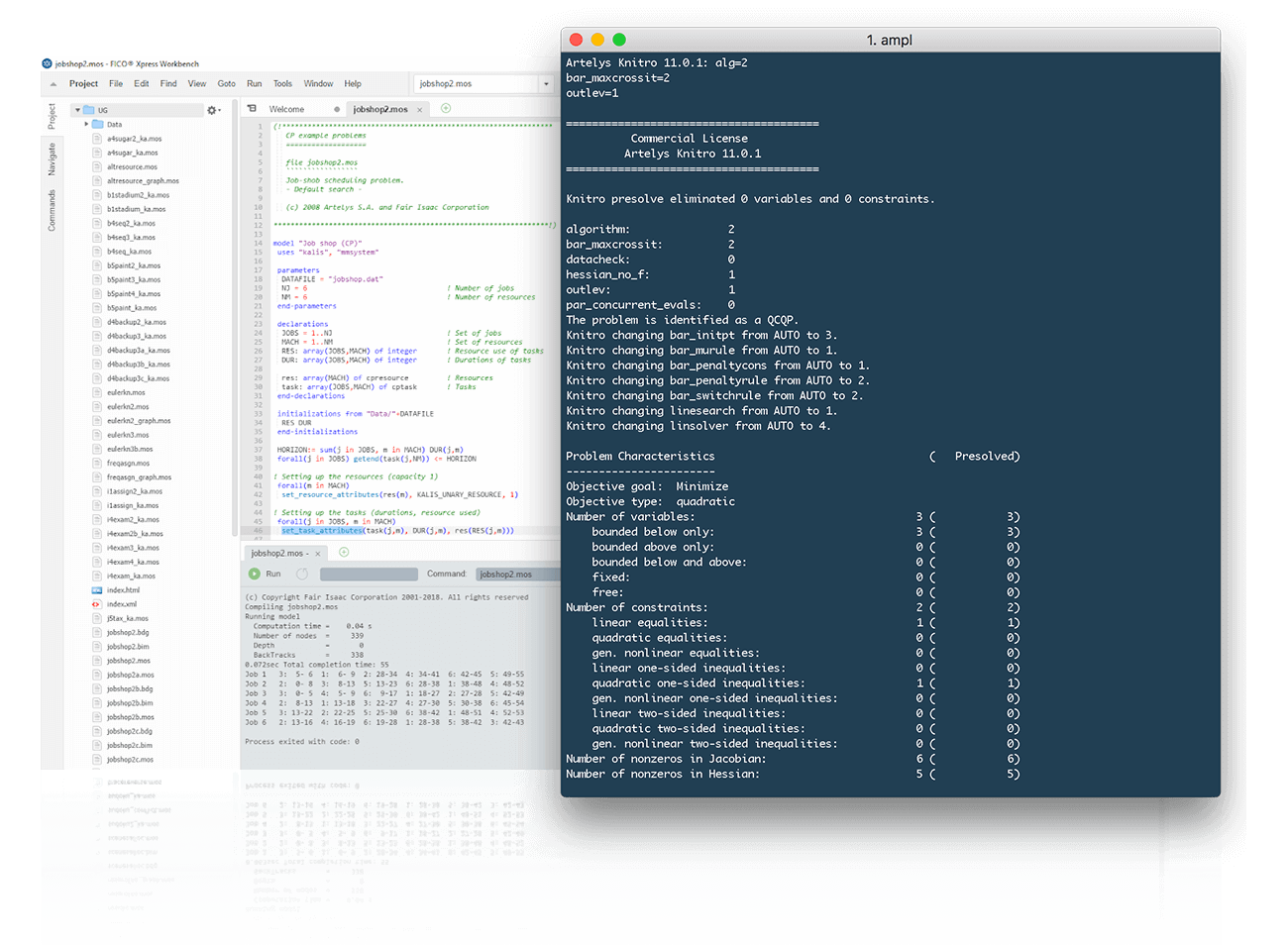
Numerical components that give you a head start
— Whether it is to model the complex problems that our customers are submitting to us or to provide the Artelys Crystal suite with the most powerful optimization engine, we rely on the most advanced mathematical programming tools in their respective fields.


Numerical components that give you a head start
— Whether it is to model the complex problems that our customers are submitting to us or to provide the Artelys Crystal suite with the most powerful optimization engine, we rely on the most advanced mathematical programming tools in their respective fields.


reports
— Discover the results of the technico-economic studies carried out on behalf of our customers using the modeling platform Artelys Crystal.
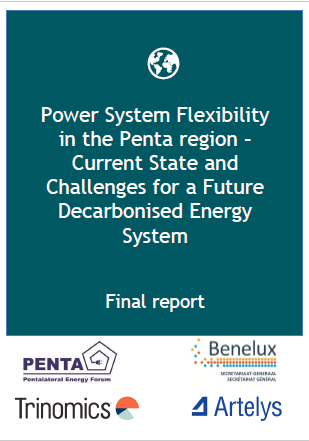
Power System Flexibility in the PENTA region – Current state and challenges for a future decarbonised energy system
The Pentalateral Energy Forum selected Trinomics and Artelys to study the evolution of flexibility needs and solutions in the Penta region and identify market and regulatory barriers for its development.
The assessment showed that flexibility needs in the Penta region will increase by 3-5 times by 2050 due to the integration of renewables and electrification, with higher impacts at the daily and weekly scale. The flexibility needs will be supplied by a portfolio of flexibility solutions, which will move from generation-based solutions to demand-side and storage. The analysis also showed the importance of interconnections and market integration, by allowing a reduction of flexibility needs and exchange of flexibility across countries.
Economic comparison of different scenarios of electrification of heating in buildings by 2050
Artelys was commissioned by GRDF to analyze the technical and economic implications of 4 heating equipment mixes in the French building sector by 2050. To this end, the energy supply systems associated with 4 scenarios for the evolution of heating and hot water equipment in France in the residential and tertiary sectors were modeled using the Artelys Crystal Super Grid software. These scenarios, all of which are compatible with the national carbon neutrality objectives, are differentiated by their rate of electrification of heating equipment and their level of national biogas consumption, within the limits of available sources. For each scenario, the hourly operation of energy production, storage and transport systems was simulated. The study underlines that a stronger electrification of building heating leads to a reduction of final energy consumption due to the high efficiency of heat pumps. However, an overall economic assessment reveals that the savings on the energy supply system do not compensate for the additional cost of equipment such as electric heat pumps. Thus, the scenarios which present a partial maintenance of direct gas use in the heating of the building appear to be economically relevant
Assessing the balance between direct electrification and the use of decarbonised gases in the 2050 EU energy system
This study aims at performing a detailed examination of investment decisions and the operational management of a 2050 EU power system with a focus on comparing different decarbonisation options for the provision of industrial heat at different temperature levels. The analysis relies on an upgraded version of the EU energy system model METIS, which allows to jointly optimise investments in electricity, hydrogen and heat generation capacities. The key findings of the study are that adopting a multi-sectoral and multi-energy modelling approach paired with an hourly year-long time resolution allows for a better detection of synergies between sectors while properly reflecting the hourly system dynamics. This may lead to significant benefits in terms of avoided investments and a more cost-efficient achievement of decarbonisation objectives.
2050 no-regret options and technology locks-ins
The study takes a deeper look at the 2050 EU energy system. It builds upon a decarbonisation scenario developed in the earlier study METIS 2 – S6 which focusses on the EU electricity sector, and its interlinkage with the hydrogen and the heat sectors. While study S6 aimed for a cost-optimal dimensioning of the EU power system, the present study goes a step further and aims to derive more general conclusions. It sheds light on no-regret options towards the decarbonisation of the 2050 EU energy system, potential risks of technology lock-ins, and major drivers of uncertainty in energy system planning like system sensitivity to climate change and commodity prices. The analysis is complemented by an evaluation of the impact of an enhanced representation of hydrogen infrastructures and provides recommendations for a holistic energy system and infrastructure planning approach.
training
— Take advantage of the skills and experience acquired by Artelys consultants thanks to an original training offer, conceived as a real instrument for sharing knowledge.


subscribe to our newsletters


© ARTELYS • All rights reserved • Legal mentions