


all your optimization solutions
Put mathematical programming and artificial intelligence at the service of efficiency
news
Powering Progress: Artelys Algorithms Enable REN’s Integration into the MARI Platform
— Artelys provided the advanced algorithms powering REN’s end-to-end mFRR processes, enabling seamless integration into the MARI platform whose market algorithms are also developed by Artelys.
EEX launches auctions for French Biogas Guarantees of Origin
— The European Energy Exchange (EEX), in collaboration with the French Ministry of Energy, is introducing auctions for biogas Guarantees of Origin (GOs). Artelys provides the market-clearing technology to optimize the auction process, supporting renewable energy certification and decarbonization efforts.
Innovative grid technologies can improve renewable energy integration in the Latvian grid by up to 40%
—The power grid faces challenges in managing the increasing amounts of new wind and solar power generation. Grid Enhancing Technologies (GETs) are essential for optimizing the use of the existing infrastructure. Artelys carried out a study for Latvian Transmission System Operator (TSO) AST to assess the renewable generation hosting capacity of the transmission grid and to evaluate the benefits that GETs can provide to renewable integration. The study performed simulations using the open-source optimal flow tool, PowSyBI Metrix. Results show that Grid Enhancing Technologies can increase Renewable Energy Sources (RES) hosting capacity by up to 40% and were announced in the following press release.
solutions
— Relying on their high level of expertise in quantitative methods, our consultants deliver efficient solutions to complex business problems that best meet the needs of our clients.

Strong skills in Operational Research, Modeling and Decision Support

Recognized know-how in scientific consulting and project management

A business experience of energy, transport and logistics issues

Mastery of methods and tools for numerical optimization and statistical analysis

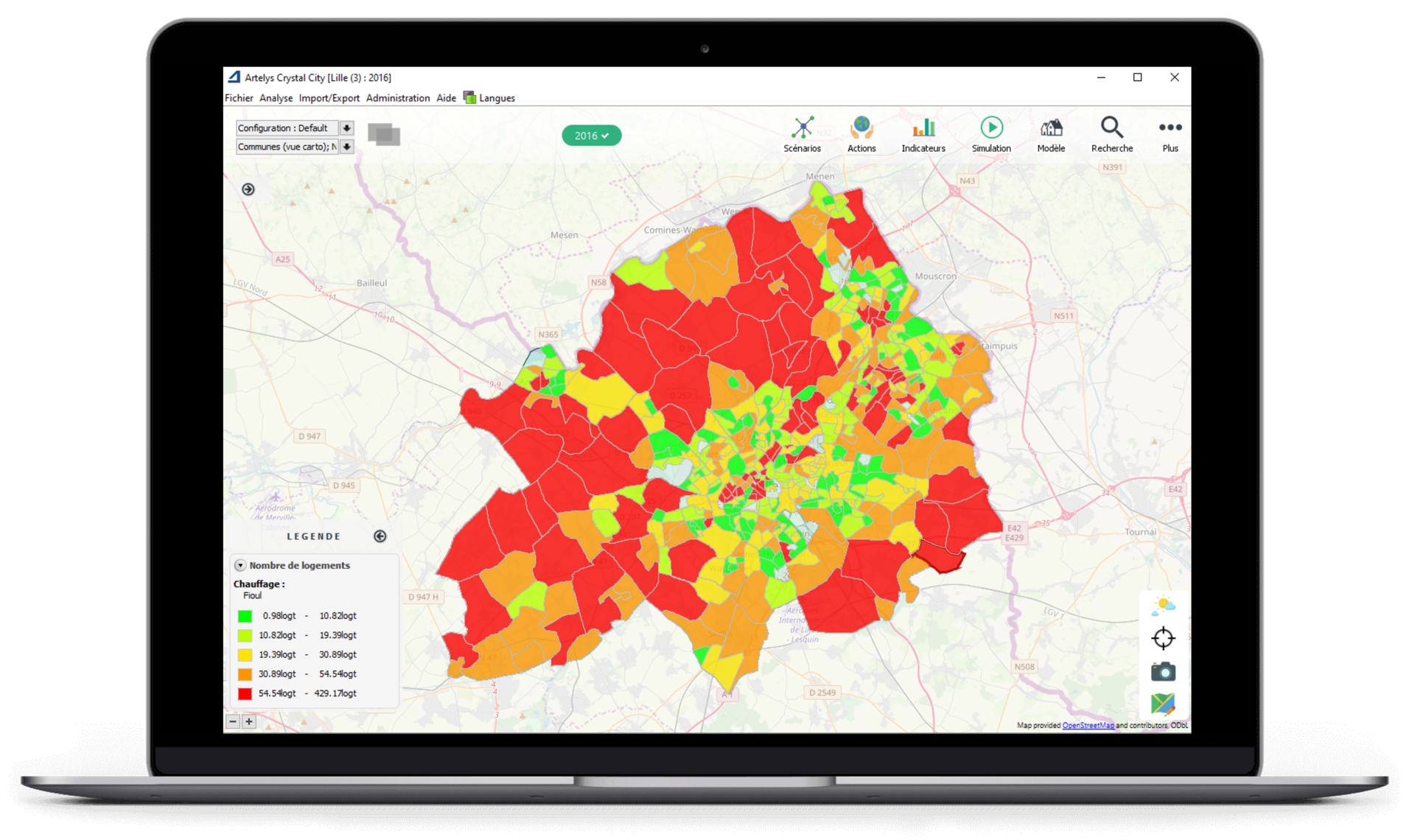

Decision support for territorial energy planning
— Artelys Crystal City is the reference tool for territorial energy planning. Its intuitive interface and advanced functions make it the ideal conductor to carry out the energy transition in the territories.
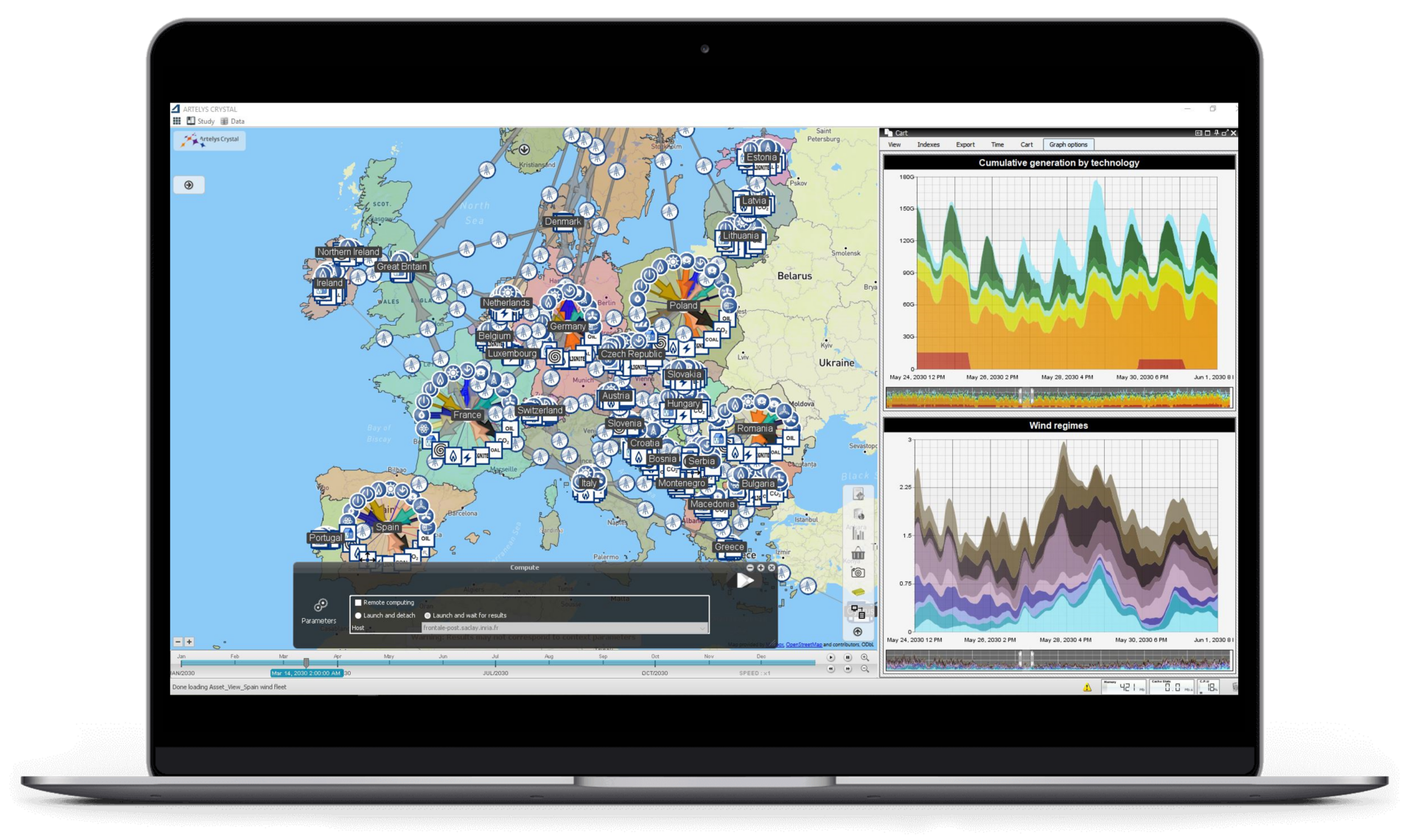

Optimization of interconnected systems
— Artelys Crystal Super Grid provides the quantitative elements to evaluate the costs and benefits of an energy strategy and to optimize it.
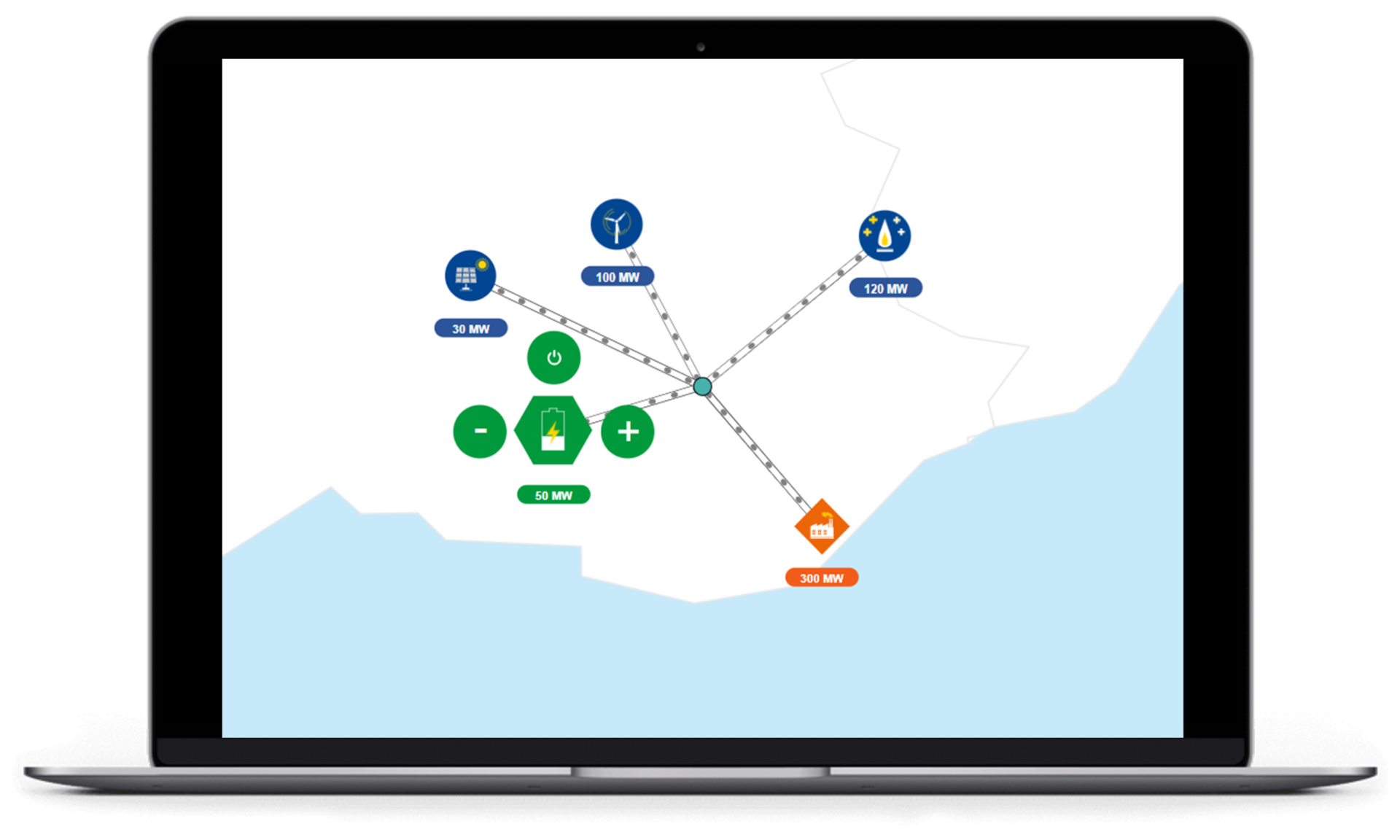

A digital twin to gain insights into the role of networks in the energy transition
— Energy infrastructures are the key to ensure the proper performance of the system. Once the production is settled, network management raises many complex issues in order to guarantee the efficient distribution of energy.
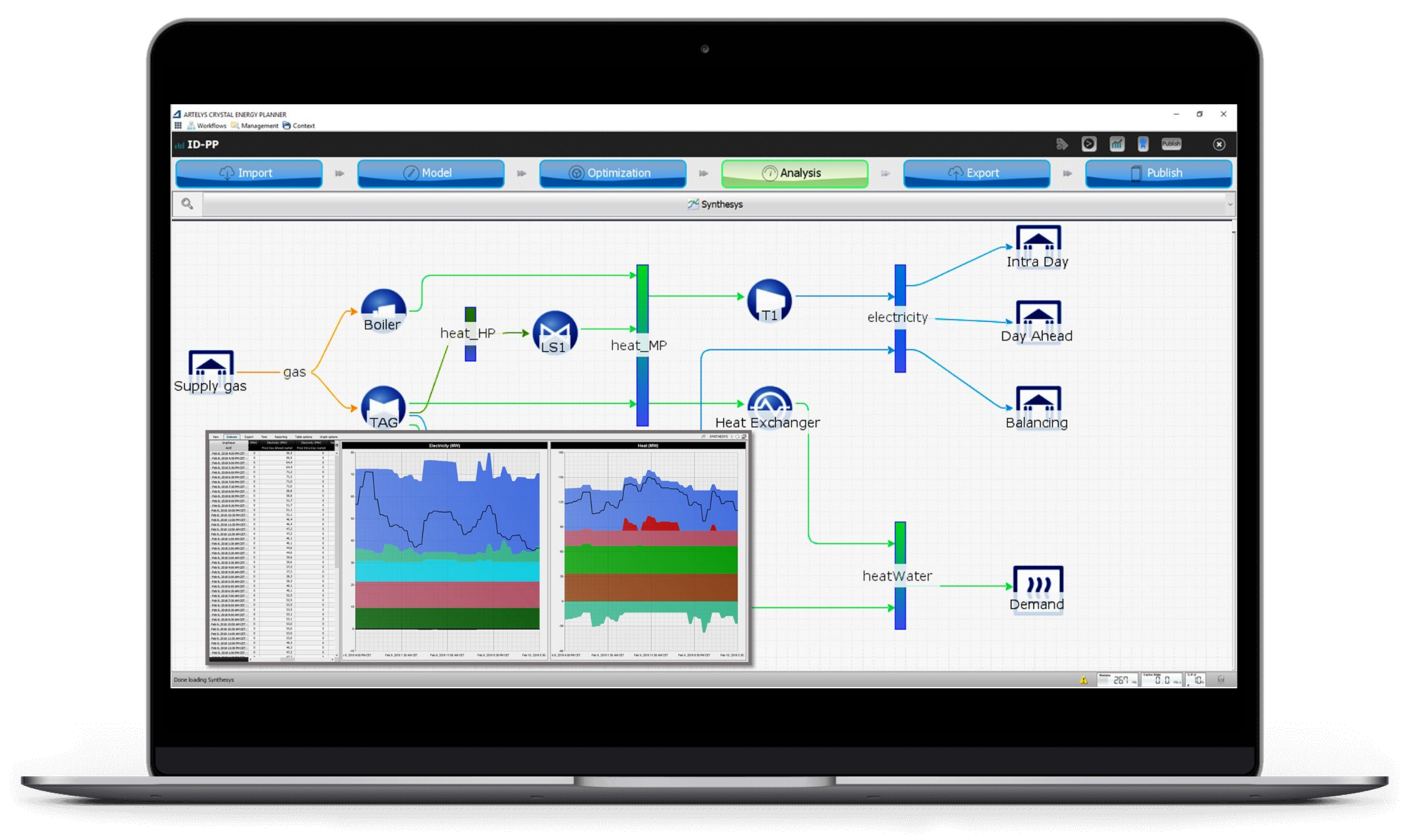

Operational management in short and medium term
— Artelys Crystal Energy Planner optimizes the short- and medium-term operational management of energy production assets. Operational planning, simplified and more reliable, becomes more competitive.
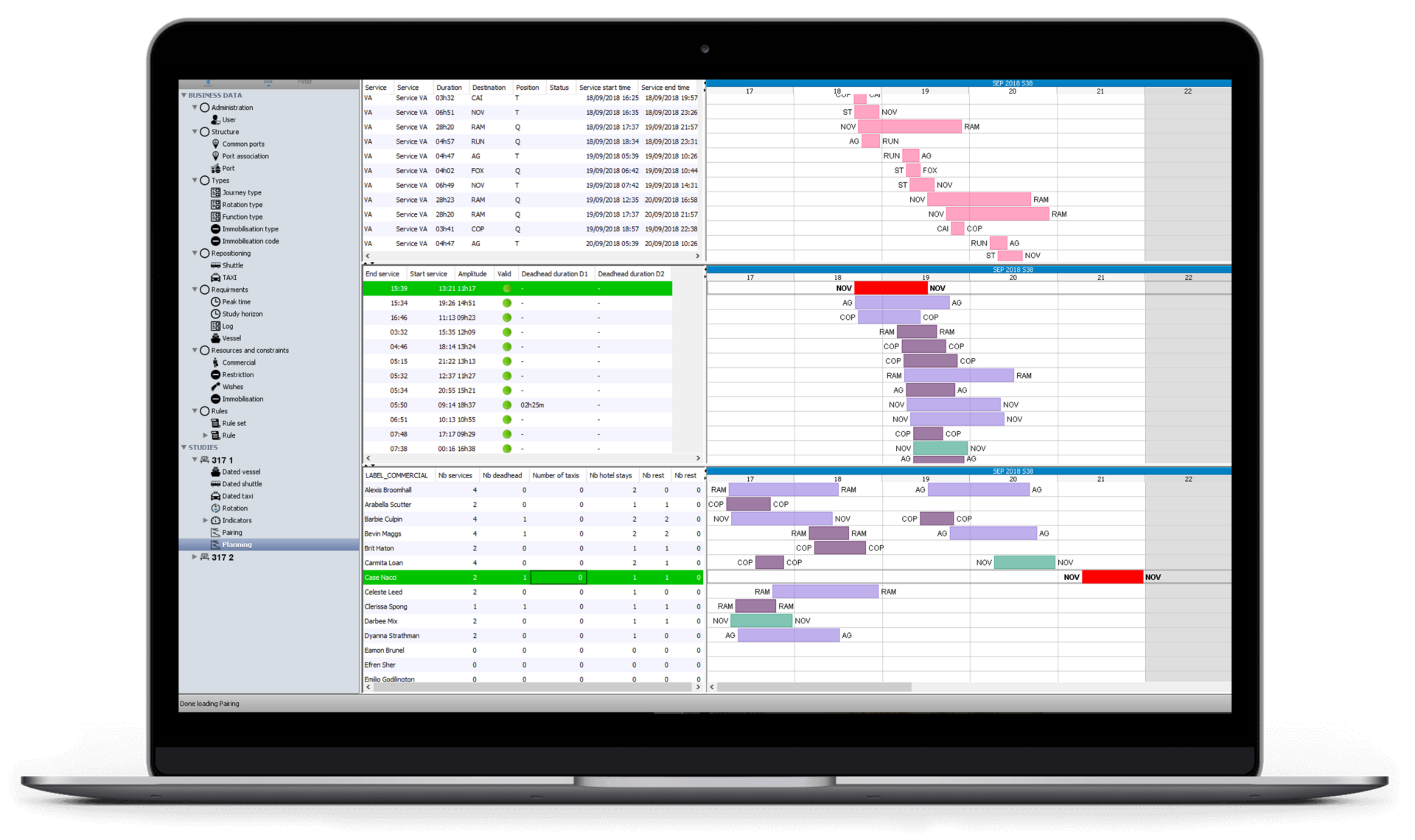

Plan your activities and resources under constraints
— Resource planning is a central issue for businesses to improve cost management, productivity and quality of service for the end customer.
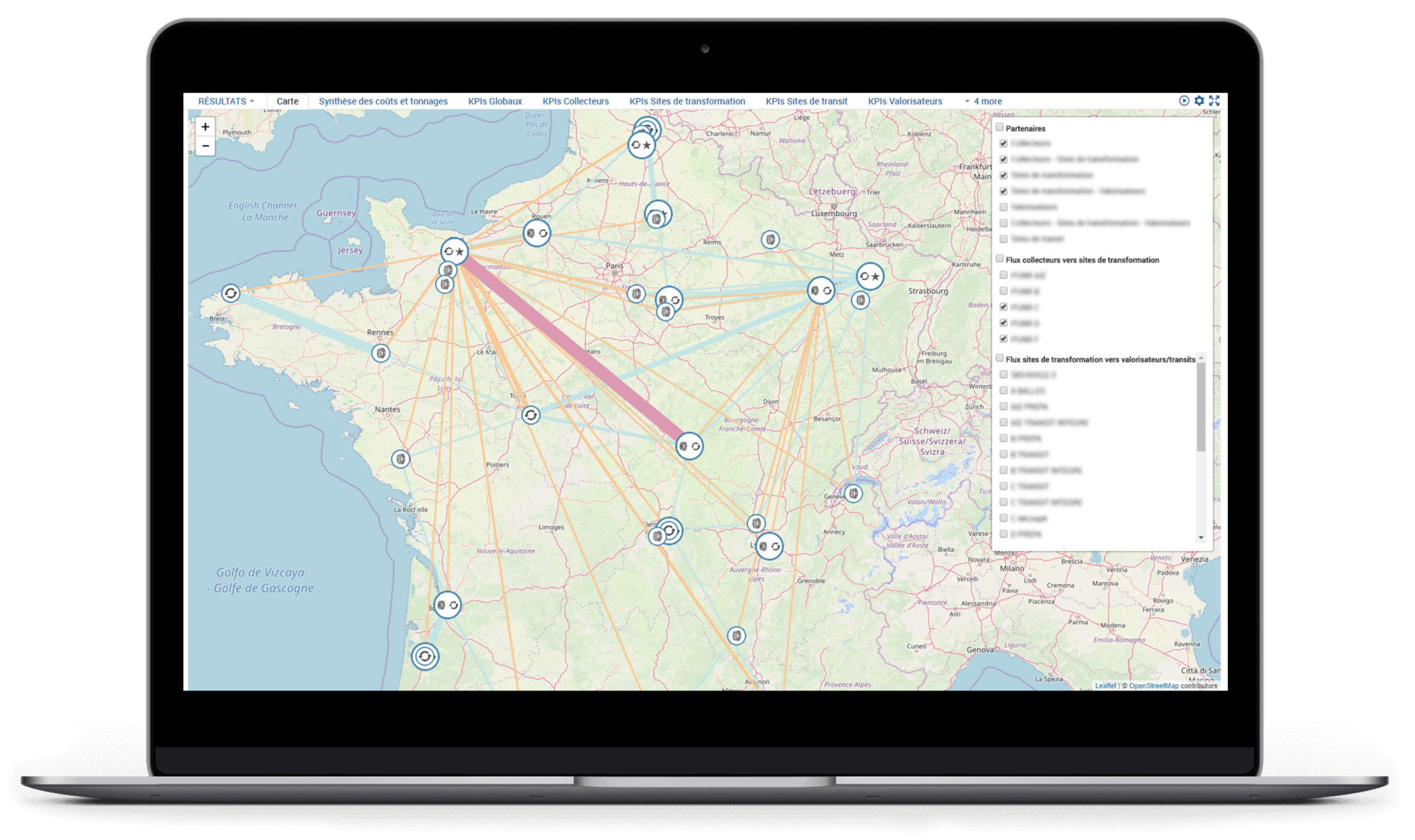

Optimize your logistics flows
— Artelys Crystal Network Designer is a software solution dedicated to the optimization, sizing and analysis of logistics networks. It allows you to reduce your logistics costs as a whole, anticipate and manage your flows at different horizons as well as simulate scenarios on your network: from resizing to operational risk.
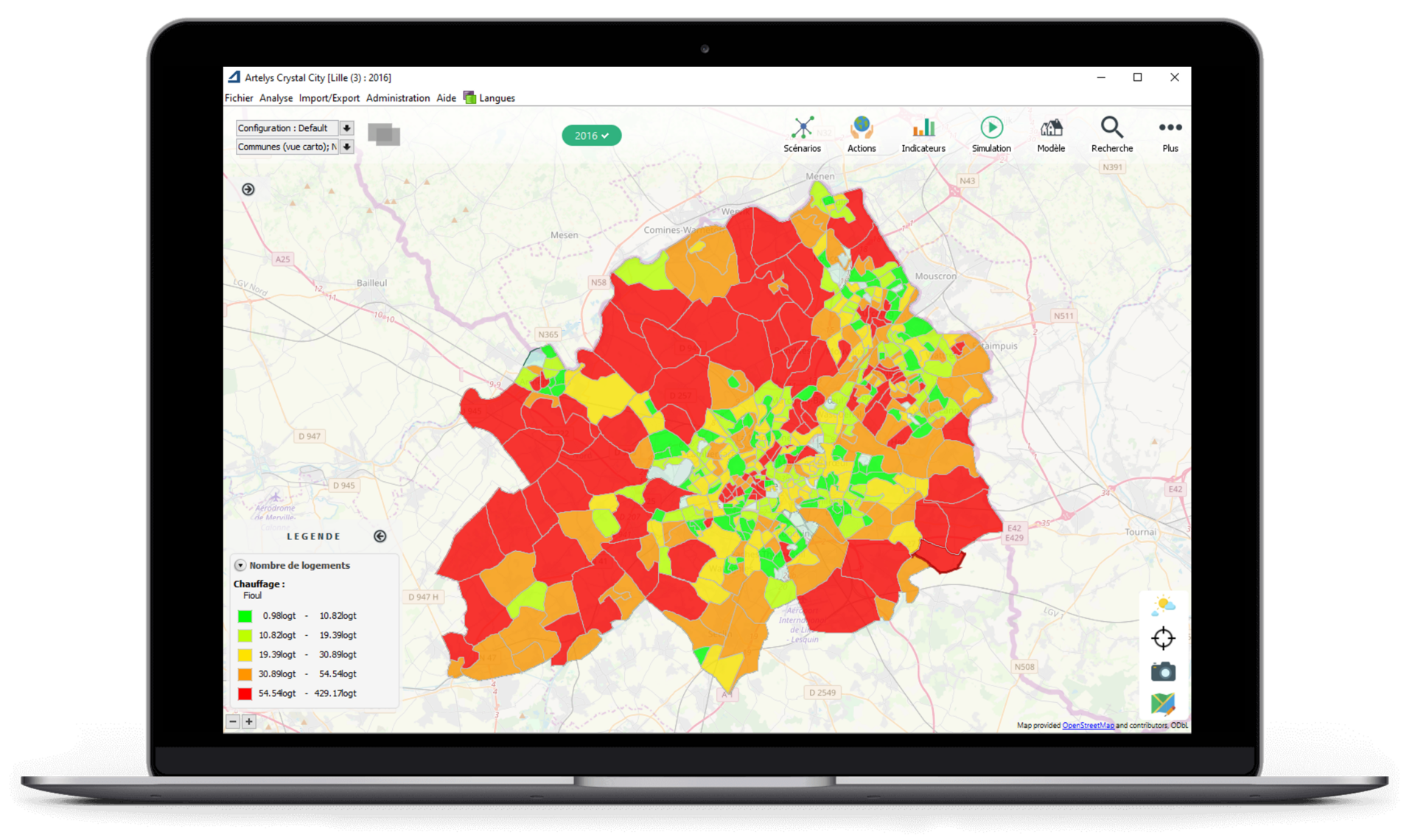
City
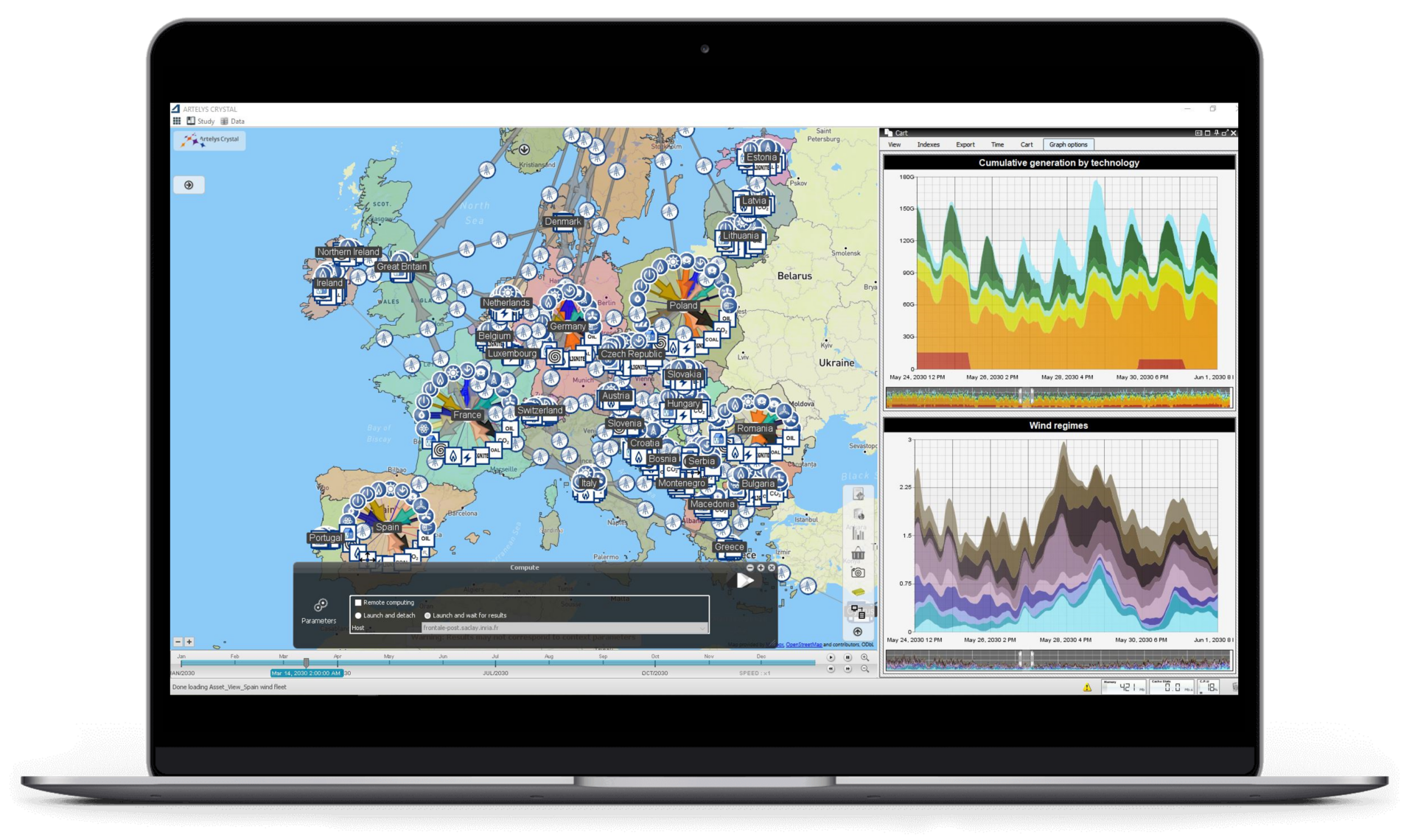
Super Grid
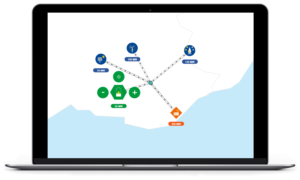
Energy Explorer
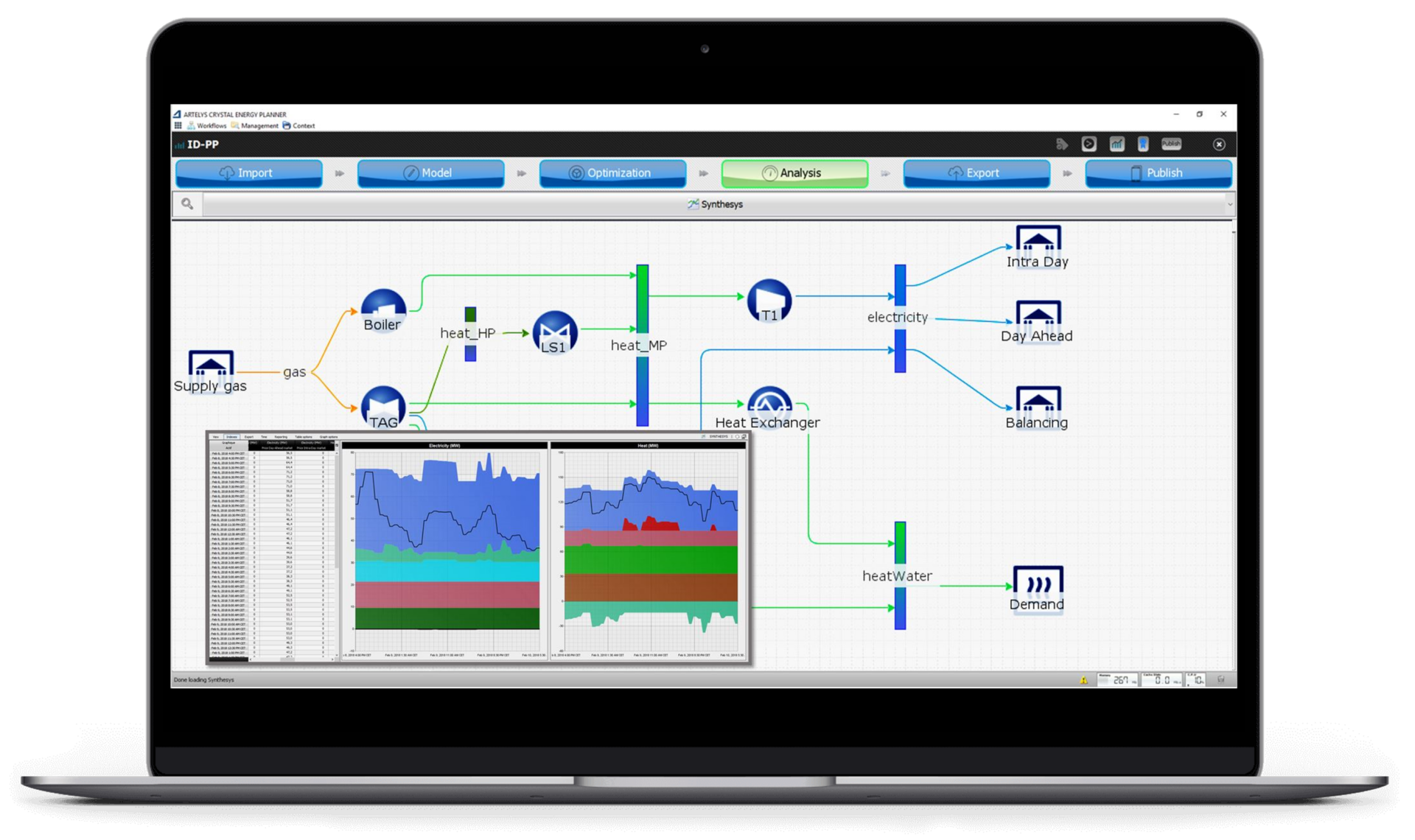
Energy Planner
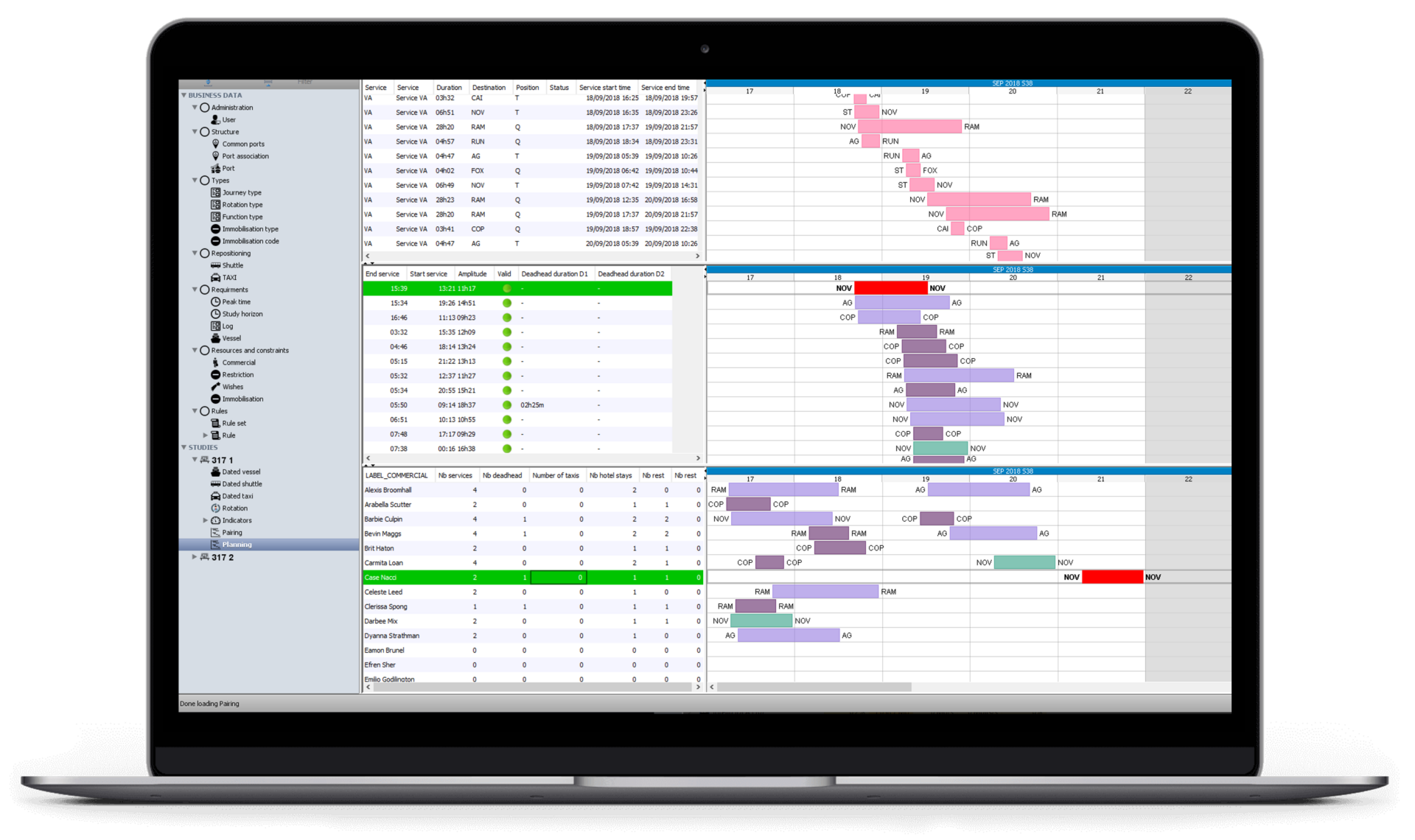
Resource Optimizer
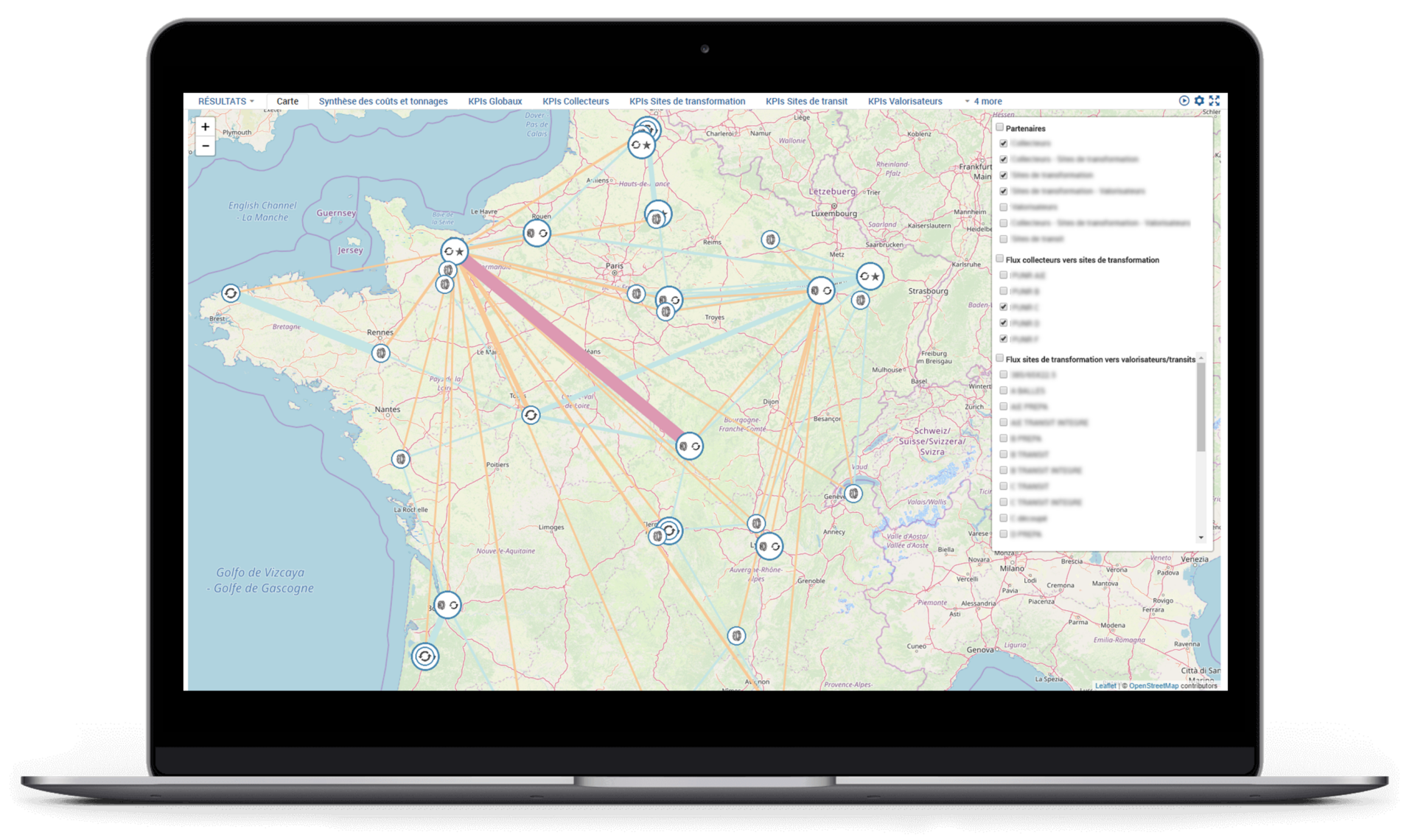
Network Designer
Decision support for territorial energy planning
— Artelys Crystal City is the reference tool for territorial energy planning. Its intuitive interface and advanced functions make it the ideal conductor to carry out the energy transition in the territories.
Optimization of interconnected systems
— Artelys Crystal Super Grid provides the quantitative elements to evaluate the costs and benefits of an energy strategy and to optimize it.
Operational management in short and medium term
— Artelys Crystal Energy Planner optimizes the short- and medium-term operational management of energy production assets. Operational planning, simplified and more reliable, becomes more competitive.
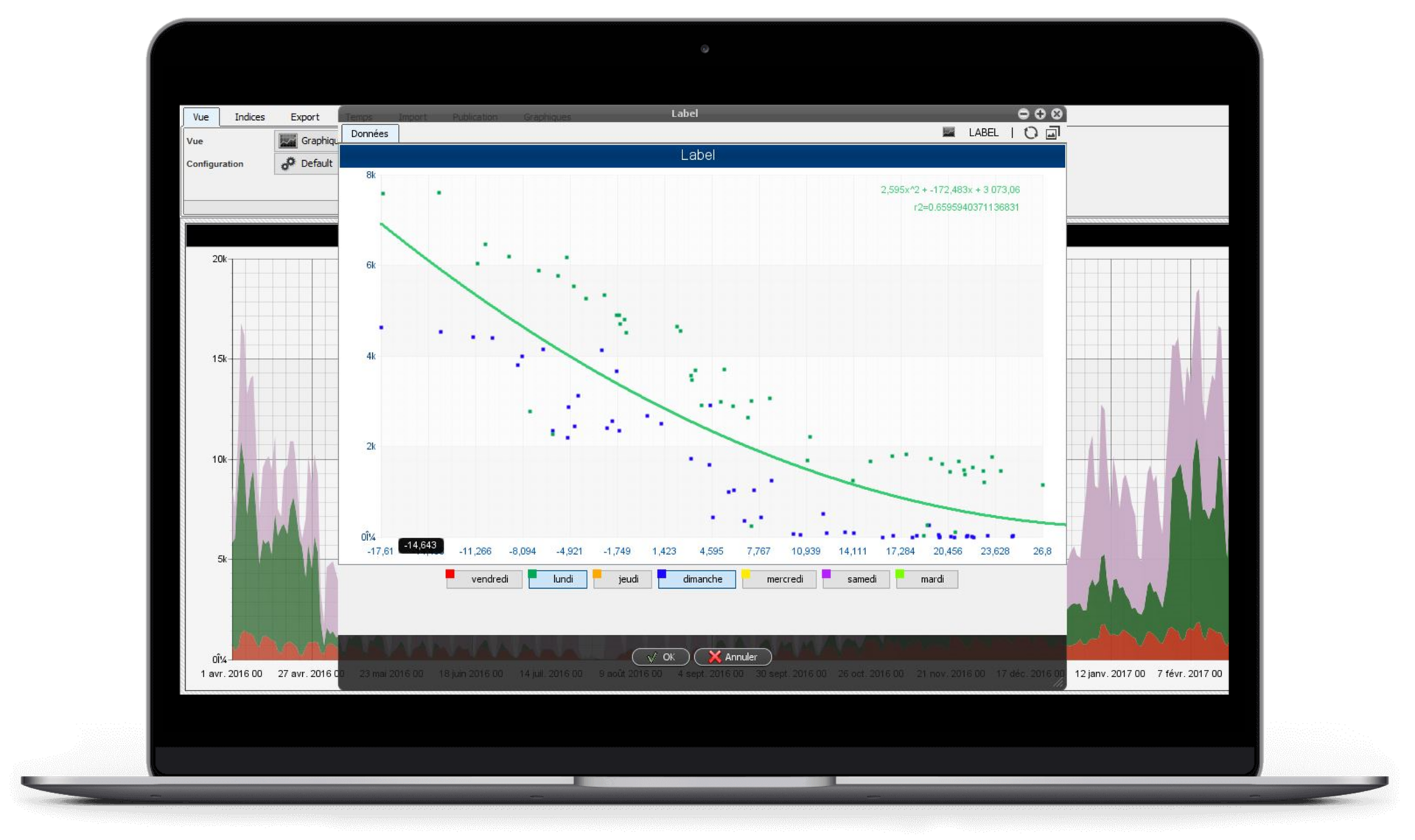

The best of statistical forecasting for your trades
— Artelys Crystal Forecast allows you to generate forecasts or scenarios of extreme reliability on short, medium and long term horizons to cover both your operational management needs and strategic planning.
Plan your activities and resources under constraints
— Resource planning is a central issue for businesses to improve cost management, productivity and quality of service for the end customer.
Optimize your logistics flows
— Artelys Crystal Network Designer is a software solution dedicated to the optimization, sizing and analysis of logistics networks. It allows you to reduce your logistics costs as a whole, anticipate and manage your flows at different horizons as well as simulate scenarios on your network: from resizing to operational risk.

Decision support for territorial energy planning
— Artelys Crystal City is the reference tool for territorial energy planning. Its intuitive interface and advanced functions make it the ideal conductor to carry out the energy transition in the territories.

Optimization of interconnected systems
— Artelys Crystal Super Grid provides the quantitative elements to evaluate the costs and benefits of an energy strategy and to optimize it.

Operational management in short and medium term
— Artelys Crystal Energy Planner optimizes the short- and medium-term operational management of energy production assets. Operational planning, simplified and more reliable, becomes more competitive.

The best of statistical forecasting for your trades
— Artelys Crystal Forecast allows you to generate forecasts or scenarios of extreme reliability on short, medium and long term horizons to cover both your operational management needs and strategic planning.

Plan your activities and resources under constraints
— Resource planning is a central issue for businesses to improve cost management, productivity and quality of service for the end customer.

Optimize your logistics flows
— Artelys Crystal Network Designer is a software solution dedicated to the optimization, sizing and analysis of logistics networks. It allows you to reduce your logistics costs as a whole, anticipate and manage your flows at different horizons as well as simulate scenarios on your network: from resizing to operational risk.

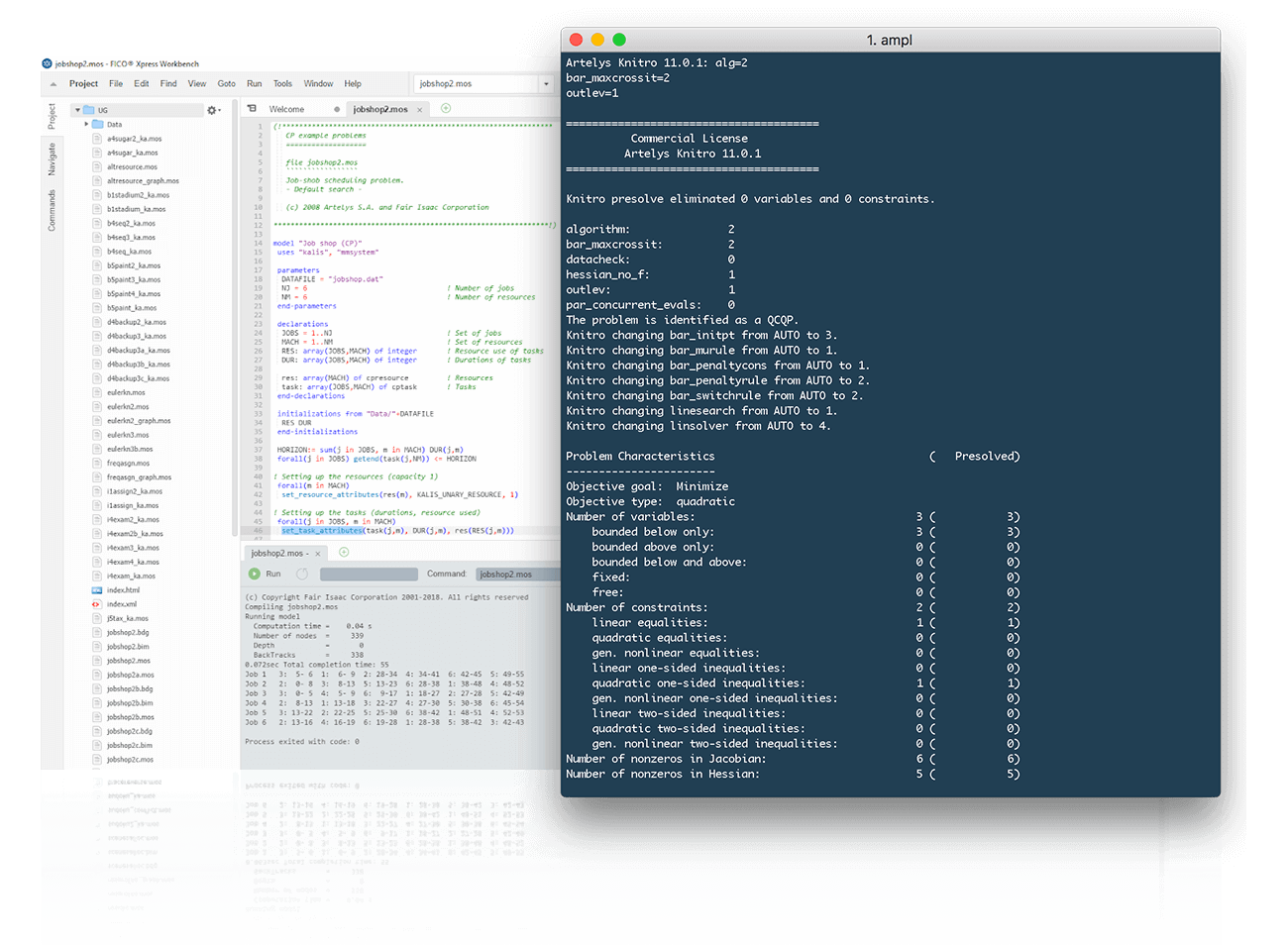
Numerical components that give you a head start
— Whether it is to model the complex problems that our customers are submitting to us or to provide the Artelys Crystal suite with the most powerful optimization engine, we rely on the most advanced mathematical programming tools in their respective fields.

Numerical components that give you a head start
— Whether it is to model the complex problems that our customers are submitting to us or to provide the Artelys Crystal suite with the most powerful optimization engine, we rely on the most advanced mathematical programming tools in their respective fields.


reports
— Discover the results of the technico-economic studies carried out on behalf of our customers using the modeling platform Artelys Crystal.
Study on the allocation of costs and benefits for offshore infrastructure in EU sea basins
To support the European Commission, and notably its Grid Action Plan, this study proposes methodologies for Cost-Benefit Analysis and Cross-Border Cost Sharing options for offshore electricity infrastructure projects. The massive investments that are foreseen in offshore generation and grid infrastructure will create huge benefits for Europe. A fair allocation of costs and benefits across Member States can be a key enabler of such projects. Who should pay for the offshore electricity infrastructure? How does this depend on the way the benefits are shared? This study aims to provide some answers.
24/7 renewable energy supply for electric mobility in the City of Paris
The City of Paris has ambitious objectives on renewable electricity supply, and they already have 100% renewable supply for municipal demand. However, current certification mechanisms (guarantees of origin) do not account for real time matching between demand and renewable production, which is variable and not necessarily available at all times.
To address the limits of this approach, initiatives such as the 24/7 Carbon-Free Energy (CFE) have been launched, with the objective of ensuring that every consumed kilowatt-hour is produced by carbon-free sources at each hour of the year. Within this context, Artelys and EY performed a study for the City of Paris and C40 to assess the potential of matching renewable generation and e-mobility demand at each hour of the year, with a focus on the role of mobility charging flexibility.
Benefit analysis of electricity interconnections between France and the United Kingdom
The aim of this study is to provide a quantitative and qualitative analysis informing decision-making on the development of new electricity interconnections between France and Great Britain. The economic benefits associated with a new interconnection project are estimated via the increase in social welfare brought about by the commissioning of this new interconnection. The expected gains in terms of security of supply are also assessed. These benefits are evaluated for the years 2030, 2040 and 2050. The future evolution of the power generation and capacity mix, energy demand and infrastructure cannot be known with certainty. Several scenarios and variants are therefore studied (including different assumptions about renewable energy deployment, nuclear capacity, interconnection levels, etc.) in order to identify the opportunities and risks associated with an increase in electricity interconnection capacity between France and Great Britain.
The impact of industry transition on a CO2 neutral European energy system
This study addresses the essential role of the industry sector for the EU’s carbon neutrality objectives, exploring possible pathways for a large-scale replacement of fossil fuels by secondary energy carriers within industry processes. Two main scenarios are examined, relying respectively on electricity and hydrogen as main vectors of the transition, in an approach that combines a detailed scenarization of industry demand with the FORECAST simulation tool and a joint optimization of European energy resource capacities and hourly dispatch for the year 2050 using the METIS energy system model. This analysis therefore provides insights on both industry specific potentials and limitations for transition and the related energy system effects, with sensitivities on the existence of global value chains for chemical imports and on the availability of wind and solar power generation. In particular, evidence from both scenarios suggest a massive increase of the demand for green hydrogen and electricity, driving significant infrastructure adaptation at European level. While domestic hydrogen generation from renewable energy sources becomes competitive compared to imports, its significance within industry needs is highly dependent on the imported volumes of strategic chemicals such as green methanol, ammonia or ethylene.
training
— Take advantage of the skills and experience acquired by Artelys consultants thanks to an original training offer, conceived as a real instrument for sharing knowledge.


subscribe to our newsletters


© ARTELYS • All rights reserved • Legal mentions